Booking Domestic Travel in Japan: Shinkansen, Highway Buses and Hotels
Updated: 2026-08-30
Quick answer
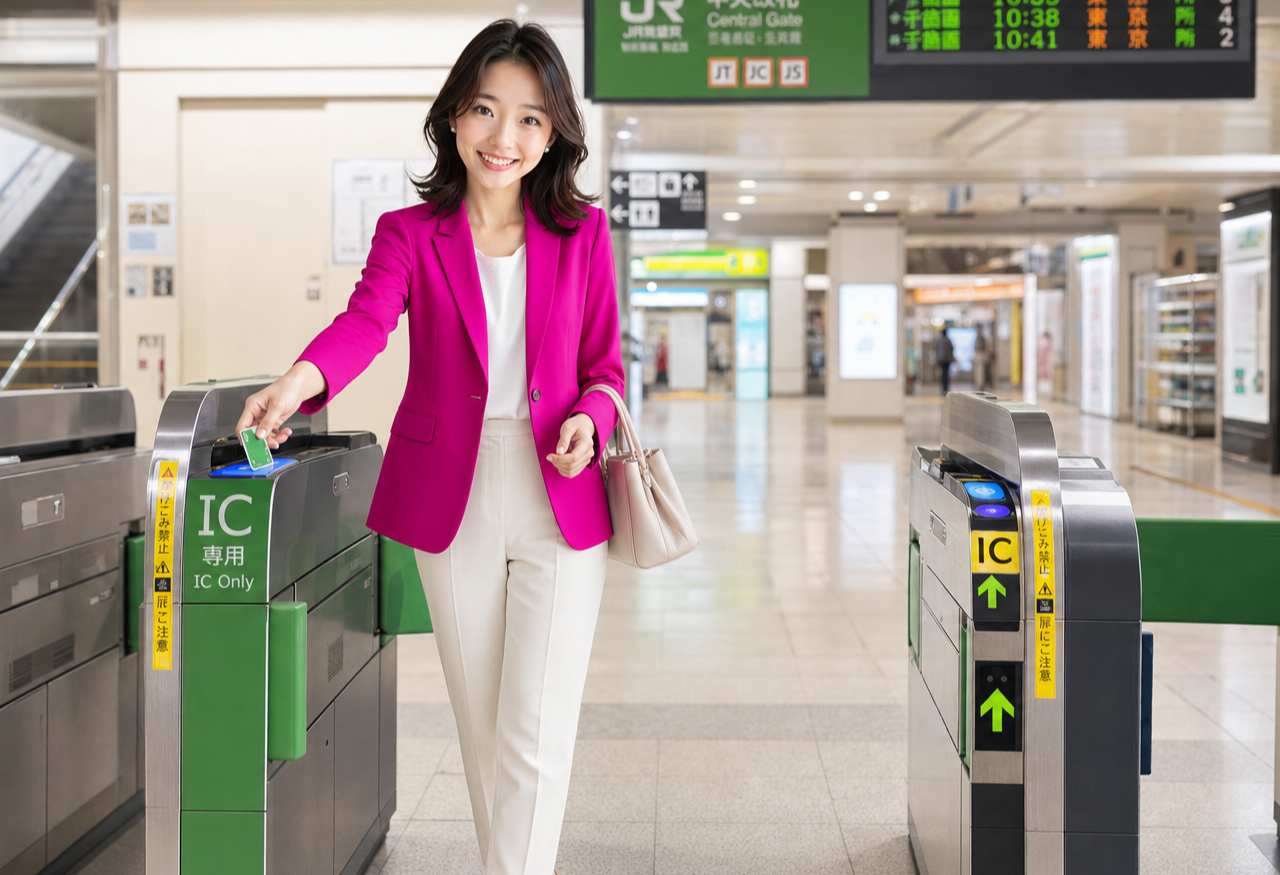
Hi, I'm Miya. If you're planning a trip somewhere inside Japan, the three pieces you'll usually book are the same: how you get there, how you move between towns, and where you sleep. For long distances that's often the shinkansen or a highway bus; for the night it's a hotel, a guesthouse, or a traditional ryokan. Almost all of it can be reserved online now, and much of it ends up as an e-ticket or a code you show on your phone.
This guide walks through the mechanics of actually making those bookings, not where to go. I'll keep it generic on purpose, because the steps are similar whichever service or operator you choose. Once you've done it once, you'll see there's a rhythm to it: reserve the seat, reserve the room, save the confirmations, and travel light with everything in one place on your phone.
Reserving shinkansen seats
On most shinkansen you have two broad choices: a reserved seat, where a specific seat is held for a specific train, and a non-reserved seat, where you buy a ticket for a car with open seating and sit wherever's free. A reserved seat gives you certainty, which is worth it on busy travel days and long rides; non-reserved is flexible if your plans might shift by an hour or two. Green cars are the more spacious option if you want extra comfort.
You can buy at a station ticket machine or counter, but online reservation has become the easy default. You create an account with a booking service, pick your train and seat from a map, and confirm. Many of these systems let you link the reservation to an IC card: instead of a paper ticket, you register your card, and at the gate you simply tap the same card you'd use for a local train. It's smooth once it's set up, so I like to reserve the evening before and double-check my platform and departure time in the morning.
A couple of habits help. Reserve earlier for weekends, holiday stretches, and popular routes, since good seats fill up. And take a moment to note which station exit or transfer you need on arrival, because big stations are their own little cities and it's easy to pop out the wrong side.
Highway buses and night buses
Highway buses are the budget-friendly way to cover long distances, and night buses add a clever twist: you travel while you sleep and arrive in the morning, saving both time and a night's lodging. Seats range from ordinary rows to roomier reclining and semi-private layouts, so it's worth reading the seat description before you book rather than after you board.
Booking is almost always online through a bus reservation site or app. You choose a departure point, a date and a seat type, then confirm and receive an e-ticket or a reservation code. Departure stops are often curbside terminals rather than big stations, so I always screenshot the boarding location and check how the map lines up with the real corner the night before.
For an overnight ride, pack like you're on a mini flight: a light layer, an eye mask, and anything you want within reach, because you won't easily get into the luggage hold mid-trip. Keep your reservation code handy on your phone for boarding, and you're set.
Hotels, guesthouses and ryokan
For where to stay, you'll see a spread from business hotels and guesthouses to a ryokan, the traditional inn with tatami rooms and often a shared bath. A ryokan can be a lovely experience, and many include dinner and breakfast in the stay, so read what's bundled before you book. Business hotels are simple and practical near stations; guesthouses are social and easy on the wallet.
Most places are reservable through booking platforms or the property's own site. You pick your dates and room, enter your details, and receive a confirmation. Keep an eye on check-in and check-out times, whether meals are included, and any note about arrival, since some smaller inns like to know roughly when you'll turn up. I save the confirmation to my phone and jot down the address in Japanese too, which makes the last stretch by taxi or on foot much simpler.
One small thing that saves stress: many stays ask you to confirm your booking or receive messages from the host, so having a way to get those notifications on the trip really smooths things over.
E-tickets, QR codes and IC-linked tickets
The nice thread running through all of this is that paper is fading. A shinkansen reservation can ride on your IC card, so you tap through the gate with no printout. A bus booking often becomes a code you show the driver. A hotel sends a confirmation you can pull up at the front desk. More and more of your trip simply lives in your apps and your photo roll.
Because of that, I keep a little routine. After each booking I save the confirmation, take a screenshot as a backup, and gather everything into one folder or note so I'm not digging through email at the gate. Screenshots matter because they still work even if a page is slow to load in the moment. And I keep my phone charged, with a small battery pack on long travel days, since the phone is now the ticket, the map and the reservation all at once.
Why a connected line makes trips painless
Here's where it all ties together. Most travel booking apps ask you to register or confirm with a verification code sent by SMS to a Japanese phone number, so having your own local number means you can sign up, receive that code, and complete the reservation on the spot rather than waiting until you're back on Wi-Fi.
And once you're actually traveling, a data-connected line is what makes the e-ticket approach feel effortless. Your seat reservation, your bus code, your hotel confirmation and your maps are all on your phone, and you'll want to open them at the gate, at the curbside stop, and at the front desk. With a number for the sign-ups and data for the day, the whole logistics side of a trip in Japan gets genuinely painless, and you can spend your attention on the trip itself instead of the paperwork.
Related guides

Getting Foreign Documents Accepted in Japan: Translation, Apostille and Stamps
Hi, I'm Miya! How a foreign birth certificate, marriage record or degree gets accepted in Japan, plus apostille. #PR
Read the guide →
Internships in Japan for International Students: How They Actually Work
Hi, I'm Miya! Japanese internships are short, seasonal, and often an early screening step. Here is how they really work. #PR
Read the guide →
The First-Year Dip: Culture Shock in Japan and How People Come Out of It
The first year in Japan often dips before it lifts — what sets it off, what helps, and when to talk to someone. #PR
Read the guide →