Cherry Blossom Season: A Newcomer's Hanami Guide
Updated: 2026-08-06
Quick answer
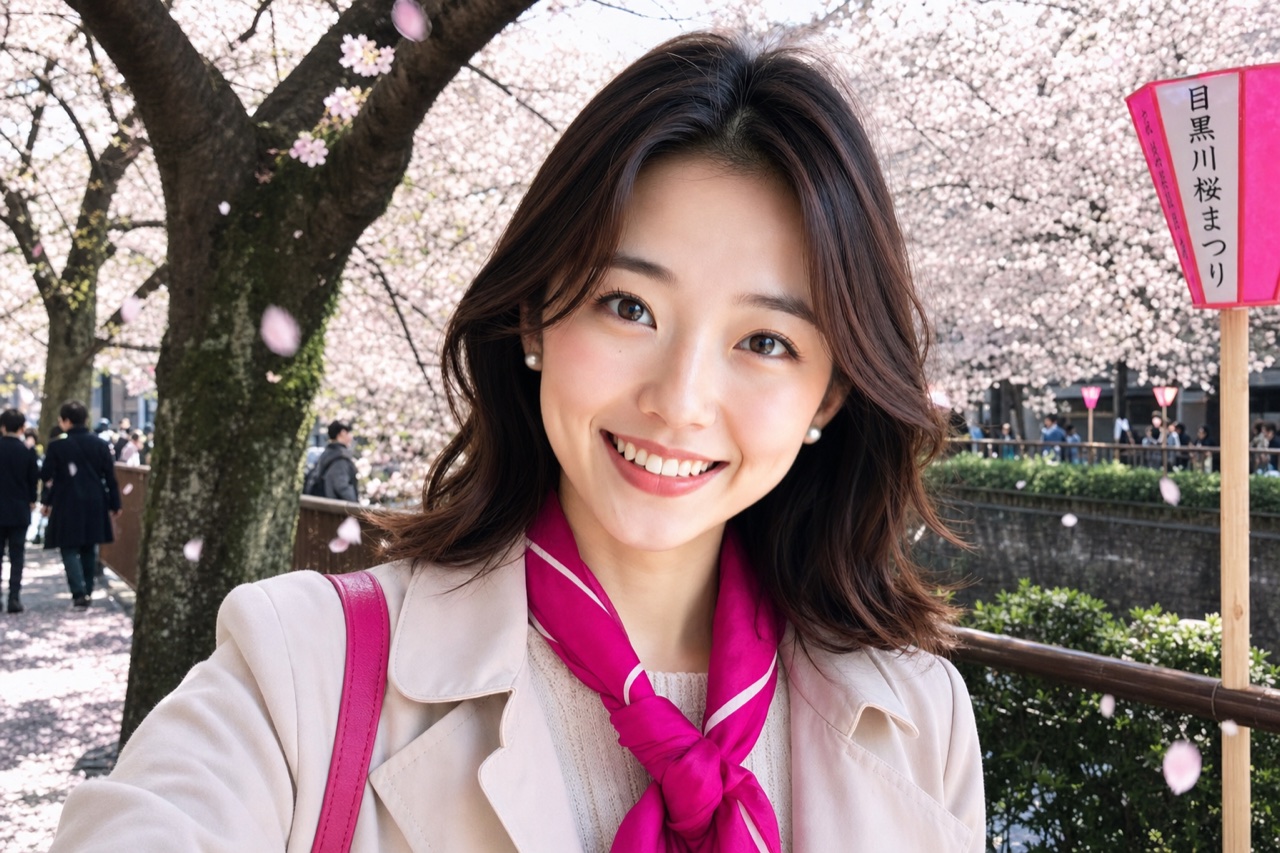
Hi, I'm Miya, and I help newcomers settle into life in Japan. If you're here in spring, you're in for something special: for a week or two, whole neighborhoods turn soft pink as the cherry trees bloom, and people gather under them for hanami — literally 'flower viewing.' It's relaxed, welcoming, and you don't need to know anyone to take part.
In this guide I'll cover when the blossoms actually appear, what hanami is, a few beginner-friendly spots, the gentle etiquette to keep in mind, and what to pack. One small thing up front: the timing shifts every year and the best spots fill up fast, so most people follow the forecast and share plans on their phones — which is much easier with a Japanese number and mobile data.
When cherry blossoms actually bloom
There's no single date, because the bloom moves across the country like a wave. Forecasters track it as the 'cherry blossom front' (桜前線 / sakura zensen), which starts in the warmer south around late March and reaches the far north weeks later. In Tokyo and much of central Japan, the most common variety — Somei Yoshino — usually opens in late March and reaches full bloom (満開 / mankai) about a week later.
The catch is that peak bloom is short: from full bloom you often have only about a week before the petals start to fall, and a single rainy or windy day can end it early. Because of this, people watch the seasonal forecasts closely in the days beforehand rather than booking far ahead. In the south, expect late March; in Tohoku and Hokkaido, cherry season can run into late April or even May, so if you miss it in one region you may still catch it further north.
What hanami is — and why everyone loves it
Hanami is simply gathering under the blossoms to enjoy them — usually a picnic with friends, family, or coworkers, sometimes just a slow walk with a coffee. People spread out a mat, share food and drinks, and pass the afternoon under the pink canopy. In the evening, many famous spots light the trees up for 'yozakura' (夜桜 / night blossoms), which have a completely different, glowing mood.
What makes it special is how open it is. There's no ticket to belong, no skill required, and it cuts across every group — students, families, elderly neighbors, and newcomers all sharing the same trees. It's one of the easiest ways to feel part of the rhythm of the year here, even in your first spring.
Beginner-friendly spots
In Tokyo, a few places are especially easy for a first hanami. Ueno Park is lively and social, with wide paths lined by trees. Shinjuku Gyoen is calmer and beautifully kept — it charges a small entry fee and does not allow alcohol or large tarps, which makes it a relaxed choice if you'd rather stroll than party. The Meguro River is lovely for an evening walk beneath blossoms that arch over the water, and Chidorigafuchi, near the Imperial Palace, is famous for its moat where you can even rent a rowboat among the petals.
Beyond Tokyo, Kyoto's Maruyama Park and the Philosopher's Path are classic, and almost every town has a local riverbank, castle, or shrine that turns pink. You don't need to travel far — a neighborhood park or a canal near your station is often just as beautiful and far less crowded. If a spot looks packed, walking ten minutes down the same river usually opens up plenty of quiet space.
Simple hanami etiquette
The etiquette is gentle and mostly common sense. If you lay out a mat, take a reasonable amount of space and don't rope off huge areas early in the day. Never break branches or shake the trees for petals — the blossoms are for everyone, and the trees are cared for year-round. Keep music and voices at a friendly level, especially in the evening and in residential parks.
Rubbish is the big one: many parks have no bins during the season, so bring a bag and carry everything home to sort later. Check the local rules for your chosen spot too — some parks limit alcohol, open flames, or reserving spots overnight. Follow any ropes or signs around the roots; staying off them keeps the trees healthy for the next visitors.
What to bring for a relaxed hanami
A light leisure sheet (レジャーシート, sold cheaply at any 100-yen shop) is the one essential — the ground is often cool and a little damp in early spring. Dress in layers, because afternoons can be warm but evenings turn cold quickly once the sun drops. For food, you don't need to cook: a convenience store or a department store food hall (depachika) has everything from bento to seasonal sakura-flavoured treats.
Round it out with a few practical extras: wet wipes and a rubbish bag, a warm drink for the evening, and a portable battery for your phone, since you'll be taking a lot of photos. That's really it — hanami rewards simplicity, and half the fun is just sitting still and watching the petals drift down.
Staying connected — and sharing the moment
Nearly every part of a good hanami runs through your phone: checking the bloom forecast, finding a spot on the map, coordinating with friends about where to meet, and — my favorite part — sending photos and video calls home so family abroad can see the blossoms with you. For all of that you want a reliable Japanese number and mobile data, not a scramble for park wifi that isn't there.
That's why I always help newcomers get connected early. With Rakuten Mobile you can apply online with just your residence card, and eSIM-capable phones can be up and running in about 15 minutes — so you're ready to follow the forecast and share the moment before the petals even open. Check current terms on the official page before you apply, and I'll be right here for the mobile part.
Related guides

Your First Week in Tokyo: A Gentle Newcomer's Itinerary (2026)
A calm, day-by-day plan for your first seven days in Tokyo — paperwork, essentials, and easing into the city without burning out. #PR
Read the guide →
Easy Day Trips from Tokyo for Newcomers (2026)
Four beginner-friendly day trips from Tokyo — Kamakura, Hakone, Nikko, and Kawagoe — reachable by train, plus how to plan them without stress. #PR
Read the guide →
Onsen Etiquette: A Gentle First-Timer's Guide (2026)
Your warm, no-stress guide to enjoying a Japanese hot spring for the first time — the simple rituals, so you can relax and fit right in. #PR
Read the guide →