ETC Cards and Expressway Driving in Japan: Tolls, Service Areas and How It Works
Updated: 2026-09-06
Quick answer

Hi, I'm Miya, and I help newcomers settle into life in Japan. If you plan to drive here, the one thing that makes long trips smooth is an ETC card paired with an ETC device in the car. ETC stands for Electronic Toll Collection: it lets you pass through tollgates without stopping to hand over cash.
In short: you get an ETC card (often issued alongside a credit card), the card sits in a small ETC reader mounted in the vehicle, and when you approach an ETC lane the gate reads your card and charges the toll automatically. Rental cars usually come with the device already installed, so you often just insert your own card.
The rest of this guide walks through how tolls and discounts broadly work, how to use expressway service and parking areas, and how cashless payment keeps you moving. None of it is complicated once you've done it once.
What the ETC card and device actually are
There are two pieces that work together. The ETC device (or on-board unit) is the reader fixed inside the car, usually near the dashboard or glovebox. The ETC card is a chip card you slide into that reader before you set off. The device handles the wireless communication with the tollgate; the card holds your payment details.
Most ETC cards in Japan are tied to a credit card account, so the tolls appear on your regular credit card statement rather than being paid at the booth. There are also prepaid-style ETC cards for people without a Japanese credit card, which some rental companies and card providers offer. Either way, the driving experience at the gate is the same.
A simple habit saves trouble: insert the card while the engine is off or in accessory mode, listen for the confirmation beep or voice prompt, and check that the device shows the card is recognised before you drive. If the card isn't seated properly, the gate won't open, so it's worth a five-second check every trip.
How tolls and discounts broadly work
Japanese expressways are mostly toll roads, and the amount you pay is generally based on the distance travelled and your vehicle class. You typically enter through a gate that logs your starting point and exit through another that calculates the total, then the ETC system charges it automatically. On fully sealed ETC sections you never touch cash at all.
Discounts exist for certain times and situations, such as reduced rates for driving late at night or on holidays, and they are applied automatically when you use ETC rather than paying manually. The specifics change from time to time and vary by route and operator, so treat any discount as a general norm rather than a fixed promise, and check the current rules before relying on one for your trip.
There are also flat-rate touring passes aimed at visitors and road-trippers, letting you drive a region's expressways for a set period. These are worth looking into if you're planning a multi-day loop, but availability and conditions differ by area, so confirm the details for the region you'll actually be driving.
Using service areas and parking areas
Along the expressway you'll find two kinds of rest stops. Service areas (SA) are larger, with restaurants, food courts, shops, restrooms, and fuel; parking areas (PA) are smaller, focused on toilets, vending machines, and a quick break. Both are placed at regular intervals so you can stop safely without leaving the expressway.
These stops are one of the quiet pleasures of driving in Japan. Many SAs sell regional specialities and local bento you won't easily find elsewhere, and the food courts are genuinely good. Restrooms are clean and open around the clock, and larger SAs often have baby rooms, ATMs, and information corners with maps and local guides.
A practical tip: because you stay inside the tolled network, entering and leaving an SA or PA doesn't affect your toll or interrupt your route. Plan a rest roughly every couple of hours, use the parking spaces marked for your vehicle size, and don't leave your ETC card in an unattended car in direct sunlight, as heat can affect the chip over time.
Cashless on the road and staying prepared
Beyond tolls, driving in Japan is increasingly cashless. Fuel stations, SA shops and restaurants, and roadside conveniences widely accept credit cards and IC transit cards, and many take QR-code and contactless payments too. It's still wise to carry a little cash for smaller rural stops and machines, but for most of a trip your card and phone will cover you.
For the toll itself, remember the ETC card is the payment method, so keep it topped up or in good standing just as you would any card. If you're renting, confirm at pickup whether an ETC card is included or whether you should bring your own, and ask staff to show you where the device sits and how to insert the card.
One more habit worth building: keep an eye on your ETC usage so there are no surprises. In Japan you can review your ETC toll history through an online service, which brings us neatly to the phone in your pocket.
Why your phone belongs in the driver's seat
Almost everything around modern expressway driving now runs through apps on your phone. Route planning and live navigation, checking traffic and closures, looking up which SA has the restaurant or fuel you want, reviewing your ETC toll history, and even some toll and parking services all assume you have an active Japanese number and mobile data while you're on the move.
That's why, once you're settling in, sorting out a Japanese phone number and a data plan early makes driving noticeably calmer. With your residence card, setting things up online through eKYC identity verification is straightforward, and an eSIM can often be ready the same day, in around fifteen minutes, so your maps and ETC history are working before your first road trip.
You don't need to rush any decision. Get comfortable with the ETC basics first, take one short drive to feel how the gates and service areas work, and keep a reliable number and data in the car so the road always feels within reach. That combination is what let me stop worrying and just enjoy the drive.
Related guides
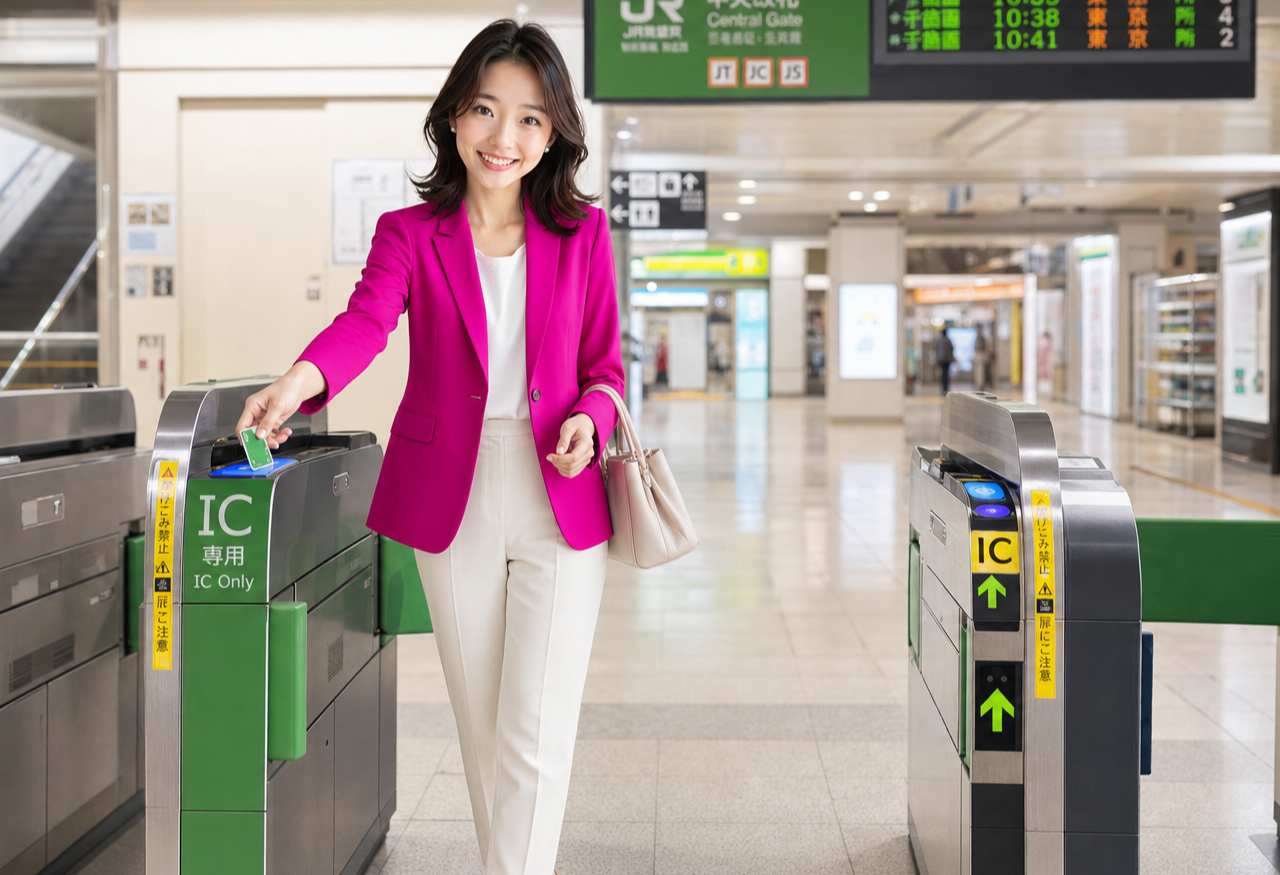
Trains and IC Cards in Japan: A Beginner's Guide (2026)
How to ride trains, buy and use an IC card, and put one in your phone — the newcomer basics that make getting around Japan effortless. #PR
Read the guide →
Where to Park Your Bicycle in Japan (and How to Get It Back If It's Taken)
Bicycle parking in Japan: station no-parking zones, daily and monthly lots, and getting a removed bike back. #PR
Read the guide →Driving in Japan: Road Rules and Signs a New Resident Should Know First
Keep left, stop at every railway crossing, share narrow streets, read the signs, and park in a lot — the driving habits to learn first. #PR
Read the guide →