Getting from the Airport into the City in Japan: Trains, Limousine Buses and Taxis
Updated: 2026-09-09
Quick answer
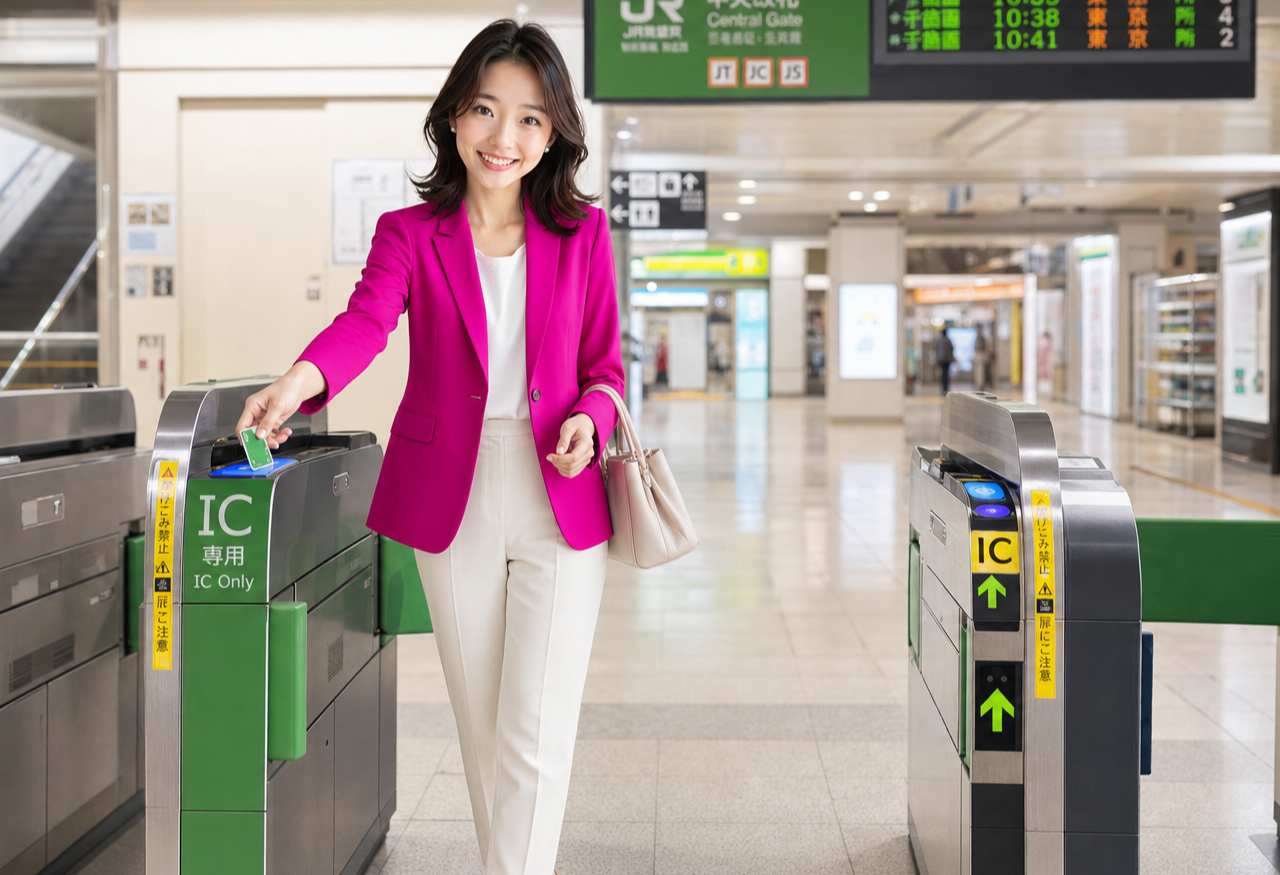
Hi, I'm Miya, and I help newcomers settle into life in Japan. Your very first journey here is usually the same one: getting from the airport into the city with a suitcase and a foggy, jet-lagged head. The good news is that Japan's major arrival airports are built for exactly this, with three reliable ways in — a fast airport express train, an airport limousine bus that drops you near big hotels and stations, or a taxi or booked ride for when you're too tired to think. Let me walk you through each so you can pick the one that fits your bags, your budget, and how awake you actually are.
Airport express trains: usually the quickest
The quickest way into the city is almost always the rail line. Most major airports — like those serving Tokyo and Osaka — have a dedicated airport express train that runs straight from the arrivals building into the central districts, so you rarely have to change trains with your luggage right away. Follow the train icon and the words 'Railways' or the line's name on the overhead signs; they're written in English as well as Japanese, and the platforms are downstairs from the arrivals hall.
These express trains have space for suitcases and clear, calm announcements in several languages, which makes them easy even when you're exhausted. If your final stop is a big hub station, the train is usually the smart pick. Just check when the last train of the night departs — if you land late, the rail option may already be closing for the day, and that's when a bus or taxi becomes the better friend.
Airport limousine buses: seated, luggage handled
If your hotel is a bit out of the way, or you simply don't want to haul bags up and down station stairs, the airport limousine bus is a gentle option. These are large highway coaches that run from the airport directly to major hotels, city terminals, and transport hubs, and a staff member loads your big suitcase into the luggage hold for you — so you just carry your day bag and find your seat.
You buy a ticket at a clearly marked counter or machine in the arrivals lobby, tell them your destination, and they point you to the right bus stand outside. The trade-off is that buses can be slower than the train in traffic, but you stay seated the whole way with your luggage handled for you, which is lovely after a long flight. It's my usual suggestion for anyone arriving with heavy bags or small children.
Taxis and booked rides: when they make sense
A taxi makes sense in a few clear cases: you land late at night after the trains and buses have wound down, you have more luggage than you can comfortably move, or you're travelling with family and splitting the cost. Official taxis wait in an orderly, marked rank outside arrivals — join the line and staff will usually direct you to the next car. Doors often open automatically, so stand back a little and let the driver handle it.
Airport taxis into central areas can be pricey because of the distance, so it's worth knowing that some airports offer flat-rate fares to certain city zones — ask or check the posted signs. A booked ride through an app can also work if you have data on arrival, though the classic taxi rank is the simplest thing to find when you're tired. Have your destination written down in Japanese, or ready to show on your phone, to skip any confusion.
Luggage: you don't have to carry it all
One thing that surprises a lot of newcomers: you don't have to carry everything yourself. Most airports have a luggage delivery (takkyubin) counter where you can send your big suitcases to your hotel or new home and travel into the city light. It usually arrives the next day, which is perfect if you're not going straight to where you'll sleep, or if stairs and rush-hour trains sound like too much on day one.
If you do keep your bags with you, pack a small day bag with your passport, documents, medicine, and charger so you're not opening a big case in a crowded concourse. Coin lockers and staffed left-luggage services exist at big stations too, so you can drop your bags and explore. And remember that many trains and buses have dedicated luggage space — look for it rather than wrestling a suitcase into a narrow aisle.
Buying tickets and reading signs while jet-lagged
Buying tickets is friendlier than it looks. Ticket machines almost all have an English button in the corner of the screen, and station staff at the airport are used to helping arrivals — a printed or on-screen destination name is enough to get pointed the right way. A rechargeable IC card (the tap-to-ride cards sold at station counters and machines) is the easiest tool of all: load some money once and simply tap in and out of trains, buses, and even convenience stores, so you're not buying a new ticket for every ride.
For signs, the pattern is reassuringly consistent: look for colour-coded line symbols, direction arrows, and English underneath the Japanese. Trust the icons — a plane, a train, a bus, an exit number — more than trying to read everything word by word when you're jet-lagged. If you're ever unsure, staff in uniform are genuinely happy to point, and a quick map on your phone confirms you're heading the right way.
Arrive already connected, then settle in
Notice how much of that first ride happens on your phone: checking which platform, tapping through a ticket machine's menu, showing your address to a driver, and pulling up a map when a sign doesn't quite make sense. That's why I gently nudge newcomers to arrive already connected. A short-term travel eSIM is a great bridge for those very first days — you switch it on before you leave home and step off the plane with data ready, no counter hunting required.
Then, once your residence card is in hand, you can set up a proper Japanese line with your own number — the thing you'll need for banking, deliveries, and daily life. You apply online with your residence card, and if your phone supports eSIM you can often be connected the same day, in about fifteen minutes, without a store visit. Sort the bridge eSIM first, settle in, then move to your Japanese number when your card arrives — and your very first journey, and everything after it, stays smooth.
Related guides

Getting Foreign Documents Accepted in Japan: Translation, Apostille and Stamps
Hi, I'm Miya! How a foreign birth certificate, marriage record or degree gets accepted in Japan, plus apostille. #PR
Read the guide →
Internships in Japan for International Students: How They Actually Work
Hi, I'm Miya! Japanese internships are short, seasonal, and often an early screening step. Here is how they really work. #PR
Read the guide →
The First-Year Dip: Culture Shock in Japan and How People Come Out of It
The first year in Japan often dips before it lifts — what sets it off, what helps, and when to talk to someone. #PR
Read the guide →