Hanabi Season: A Newcomer's Guide to Summer Fireworks (2026)
Updated: 2026-08-13
Quick answer

Hi, I'm Miya, and I help newcomers settle into life in Japan — and if you're here across July and August, a hanabi taikai (fireworks festival) is one thing I'd never let you miss. These aren't the ten-minute displays you might know from home: a big Japanese fireworks show can run for an hour or more, with tens of thousands of shells choreographed to build in waves, and whole neighborhoods coming out in yukata to watch from the riverbank.
In this guide I'll explain how a hanabi taikai actually works, what to wear and pack, how to claim a decent viewing spot, and — the part that trips newcomers up — how to find out when and where they're happening. A quick note before that: the dates, maps, and paid-seat tickets almost all live in apps and websites, so a Japanese number and mobile data are what keep you from missing the whole thing.
What a hanabi taikai actually is
A hanabi taikai is a dedicated fireworks festival, usually held on a summer evening beside a river, a bay, or a large open park so huge crowds can watch the sky safely. Many are decades or even centuries old and are a point of local pride — the pyrotechnicians treat them as an art form, timing bursts to music and saving the most spectacular sequences, like the rapid-fire finale, for the very end.
Around the launch area you'll usually find the same warm festival atmosphere as any matsuri: rows of yatai (food stalls), families on picnic sheets, and couples and friends in yukata. The fireworks themselves are the main event, but the hours of waiting, eating, and people-watching before the first shell goes up are half the fun. You don't buy a ticket for most of them — you simply turn up early and find a patch of ground.
When and where they happen
Hanabi season runs from roughly late July through August, peaking in the first two weeks of August, with a scattering of events in early July and into early September. Almost every city and town holds at least one, so wherever you live there's very likely a display within reach. The famous large-scale ones — along the Sumida River in Tokyo, and the big riverside taikai across Kanto and Kansai — draw enormous crowds, while smaller local shows are calmer and easier for a first-timer.
Two practical things to know. First, many festivals have a designated rain date (雨天順延): if the weather is bad they're pushed to a backup day rather than simply canceled, so always check the status on the day. Second, the biggest events are so popular that trains and stations near the venue get extremely crowded afterwards — part of planning is deciding how you'll get home before you even arrive.
Getting a good spot
For free viewing areas, the rule is simple: arrive early. For a popular taikai, that can mean staking out a spot on the riverbank in the afternoon, hours before dusk, with a leisure sheet (a cheap plastic picnic mat you can buy at any konbini or hundred-yen shop) and something to weigh down the corners. Once you've laid your sheet, you can take turns wandering the food stalls while someone keeps the spot.
If standing around for hours isn't for you, many big festivals sell paid reserved seats (有料観覧席) — a marked spot or chair with a clearer view, booked online in advance and often selling out weeks ahead. It's worth it for the marquee events. Wherever you settle, look for a spot that isn't directly behind trees, a bridge, or tall buildings, and ideally slightly upwind so smoke from the shells drifts away from you rather than greying out your view.
What to wear and bring
You'll see many people in yukata — the light cotton summer kimono — and wearing one is a lovely way to join in, though jeans and a t-shirt are completely normal too. If you do wear a yukata, pair it with geta or comfortable sandals, and remember you'll be sitting on the ground and walking through crowds, so keep it simple. Above all, dress for a hot, humid evening that cools only a little after dark.
For your bag, think comfort and self-sufficiency: a leisure sheet, a hand fan or battery fan, a small towel, insect repellent, and plenty to drink (vending machines near big venues sell out fast). Bring cash in coins and small notes, since most yatai don't take cards, and carry a small bag for your own rubbish — bins are scarce and you're expected to take your litter home. A portable phone battery is genuinely essential: you'll be navigating, messaging, and taking photos all evening on a crowded network.
Etiquette and staying comfortable
The etiquette is gentle and mostly about sharing the space. Don't spread your sheet larger than your group needs, don't rope off huge areas hours in advance beyond what's reasonable, and never move someone else's sheet. Keep walkways clear so people can pass, and follow the marshals and any one-way pedestrian routes near the station — for the biggest events these crowd-control measures are strict and there for everyone's safety.
When it ends, resist the urge to rush the station with everyone else. The crush right after the finale is intense; if you can, linger for twenty or thirty minutes, finish a drink, let the first wave clear, and you'll have a far calmer trip home. Agree on a meeting point with your group beforehand too — once the crowd swells and phones struggle on the packed network, a pre-agreed spot beats trying to find each other in the dark.
What keeps you in the loop
Look at everything a good hanabi night quietly runs on: checking the date and the rain-date status, booking a paid seat, mapping your trains, watching the weather, sending photos to family back home, and finding your friends in a crowd of thousands. Every one of those happens on your phone — which means a Japanese number and reliable mobile data sit underneath the whole evening. Miss the message that the show was pushed to the rain date and you miss it entirely.
That's exactly why I help newcomers get connected before the season starts. With Rakuten Mobile you can apply online with just your residence card, and eSIM-capable phones can be up and running in about 15 minutes — no store visit — so you're ready before the first shell lights the sky. Check the current terms on the official page before you apply, and I'll be right here for the mobile part, so you can focus on the yukata, the yatai, and the fireworks.
Related guides

Your First Week in Tokyo: A Gentle Newcomer's Itinerary (2026)
A calm, day-by-day plan for your first seven days in Tokyo — paperwork, essentials, and easing into the city without burning out. #PR
Read the guide →
Easy Day Trips from Tokyo for Newcomers (2026)
Four beginner-friendly day trips from Tokyo — Kamakura, Hakone, Nikko, and Kawagoe — reachable by train, plus how to plan them without stress. #PR
Read the guide →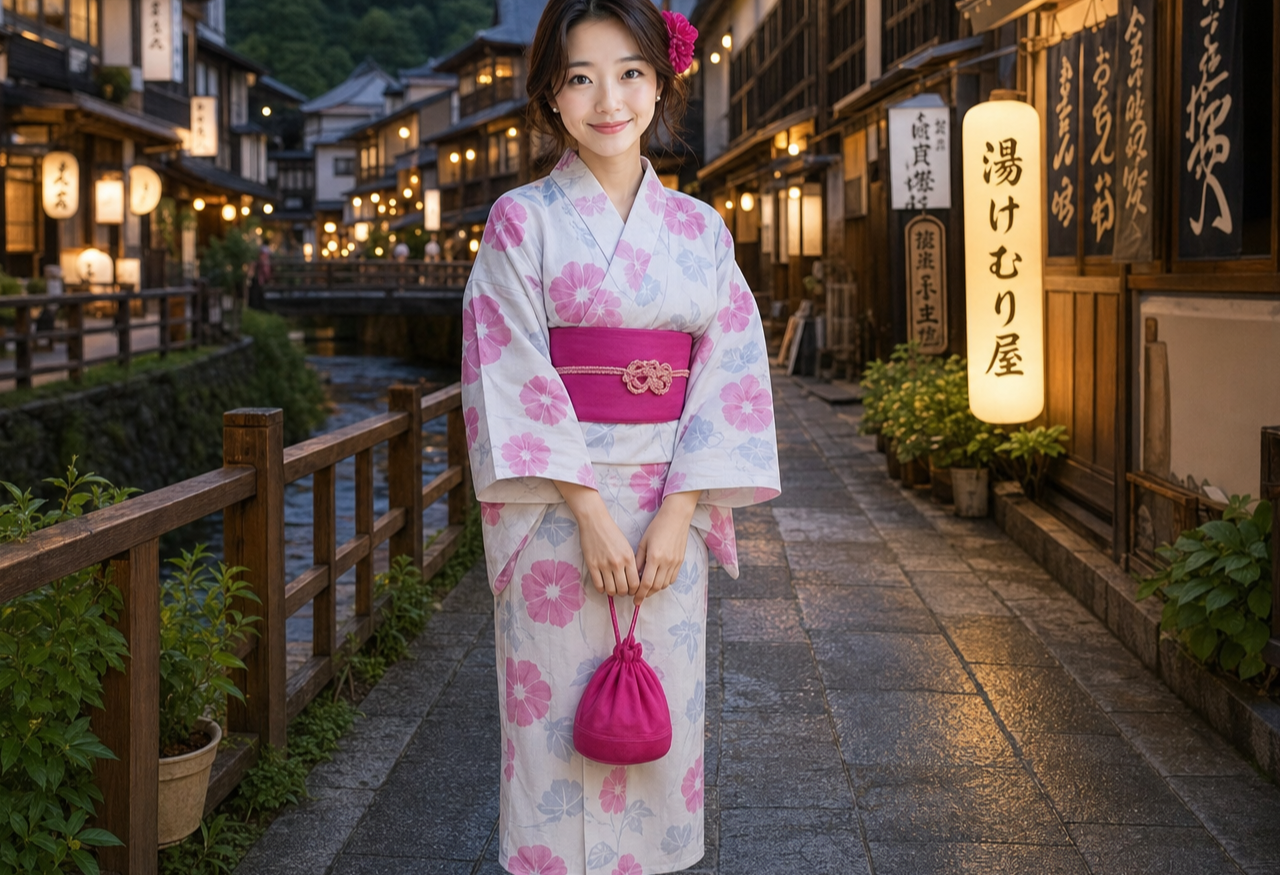
Onsen Etiquette: A Gentle First-Timer's Guide (2026)
Your warm, no-stress guide to enjoying a Japanese hot spring for the first time — the simple rituals, so you can relax and fit right in. #PR
Read the guide →