Getting Online the Moment You Land: Bridging the Gap Before Your Japanese Number
Updated: 2026-08-22
Quick answer
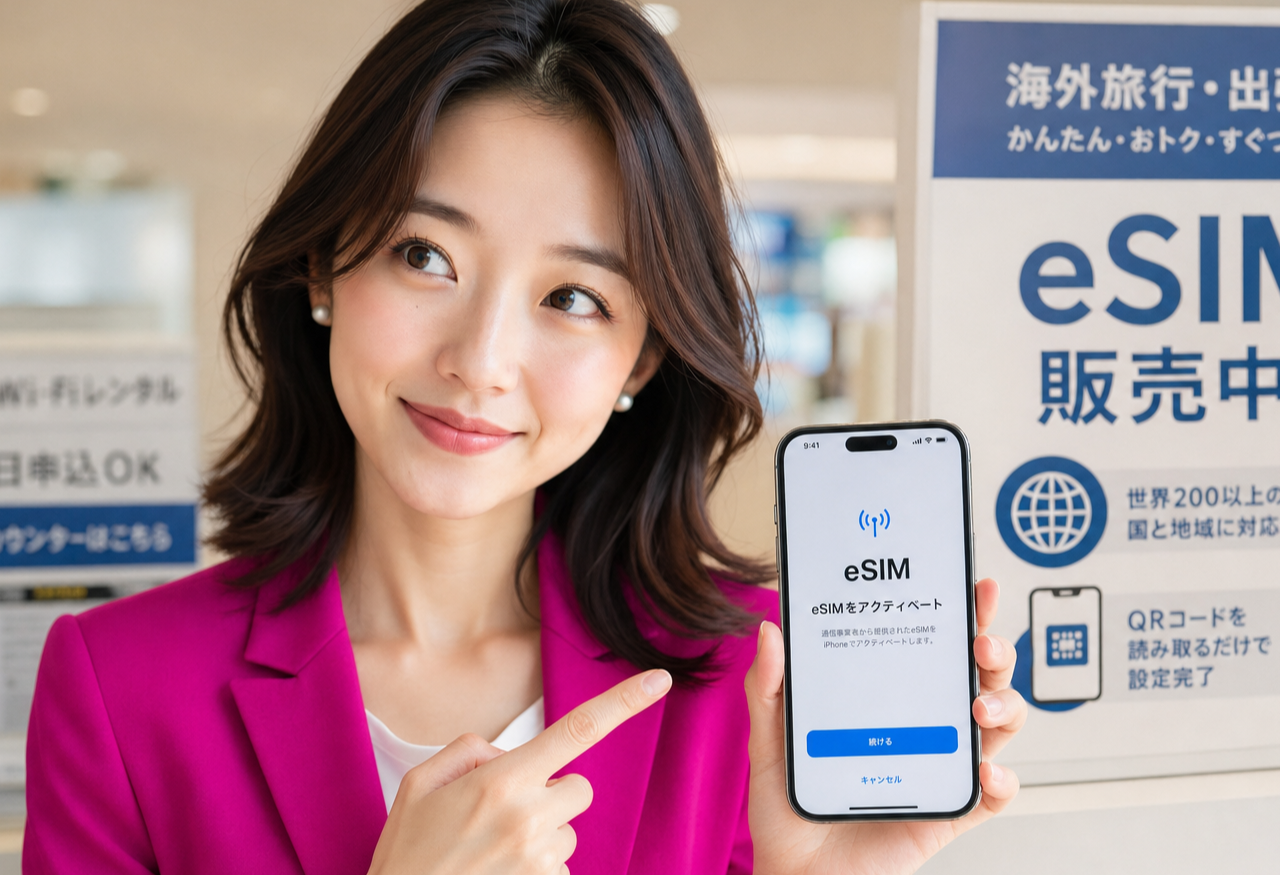
Hi, I'm Miya. Here's the short version: the day you land, you don't yet have a Japanese phone number, and that's completely normal. A proper Japanese mobile contract starts after your residence card is issued, so your very first days are a bridge you plan for separately.
For that bridge, lean on airport and station Wi-Fi plus a short-term travel eSIM or a rental device to cover the gap. Then, once your residence card is in hand, you switch over to a real Japanese line. I'll walk you through both halves so nothing catches you off guard at arrivals.
Airport Wi-Fi: what it really covers
Most major Japanese airports offer free Wi-Fi, and it's genuinely handy for the first hour: confirming your ride, messaging whoever is meeting you, or pulling up a train route. I always connect before I leave the arrivals floor so I'm not scrambling once I'm outside.
The catch is that airport Wi-Fi stops at the door. The moment you're on the train or in a taxi, you lose it, and that's exactly the stretch where you most want a map or a translation app. So treat airport Wi-Fi as a first breath, not your plan for the day.
Travel eSIM vs. rental device for the first days
A short-term travel eSIM is my go-to when my phone supports it. You buy it before or right after you land, activate it in a few minutes, and you have data as you walk out — no physical card to swap and nothing to return later.
A rental pocket Wi-Fi or SIM is the friendlier route if your phone is locked, doesn't take eSIM, or if several of you want to share one connection. You usually pick it up at an airport counter and drop it back before you leave the country, so it's a clean, self-contained option.
Either way, think of this as travel connectivity, not your permanent line. It buys you a smooth first week while you settle in, register your address, and wait for the paperwork that unlocks a real Japanese contract.
Why your Japanese number waits on the residence card
Here's the part that surprises a lot of new arrivals: you can't sign a standard Japanese mobile contract on day one, because carriers ask for your residence card as identification. Until that card exists, the proper line simply can't start — it's not you doing something wrong, it's just the order of steps.
Your residence card is typically issued at the airport on entry for longer stays, or arranged shortly after through your local city or ward office. Once you have it, the door to a real Japanese number opens, which is why I plan my travel eSIM to comfortably outlast those first errands.
Planning the handoff smoothly
The trick is overlap. Keep your travel eSIM or rental active a little past the day you expect your card, so you're never stuck offline between the two. I'd rather have a day of overlap than a morning with no data while I'm still finding my feet.
Use the bridge days to get your basics sorted — your address registered, a bank or payment method underway, and your phone ready to add a new line. Doing that quietly in the background means that the day your card lands, switching to a real Japanese number is a five-minute afternoon task, not a project.
Getting a proper Japanese number and data
Once your residence card is in hand, you can move to a real Japanese line. With Rakuten Mobile you can sign up online using just your residence card, so there's no need to line up at a shop counter on a jet-lagged afternoon.
If your phone supports eSIM, activation is same-day and usually takes around fifteen minutes — you scan a code, follow the steps, and your new Japanese number and data are live while your travel eSIM quietly retires. That's the clean handoff I aim for every time.
Terms and the exact sign-up flow can change, so always confirm the current details on Rakuten Mobile's own page before you start. Do that, and the airport-to-apartment gap becomes a non-event — a few smooth days on travel data, then a proper Japanese number the moment your card allows it.
Related guides

The Apps Every Newcomer in Japan Actually Needs (2026)
The short list of apps that really run daily life in Japan — transit, translation, LINE, payments — and why getting connected comes first. #PR
Read the guide →
The Certificate of Eligibility: The Paperwork That Happens Before Your Visa
A pre-arrival guide to Japan's Certificate of Eligibility: who applies, what you'll need to send, and how long to allow. #PR
Read the guide →
Reading Japanese Phone Numbers: What Those Prefixes Mean on a Form
How to read Japanese phone numbers: landline area codes, 070/080/090 mobiles, 0120 and 0570 prefixes, hyphens, and dialling +81. #PR
Read the guide →