Taking Your Japanese Phone Abroad: Roaming, Data and Staying Reachable
Updated: 2026-09-02
Quick answer
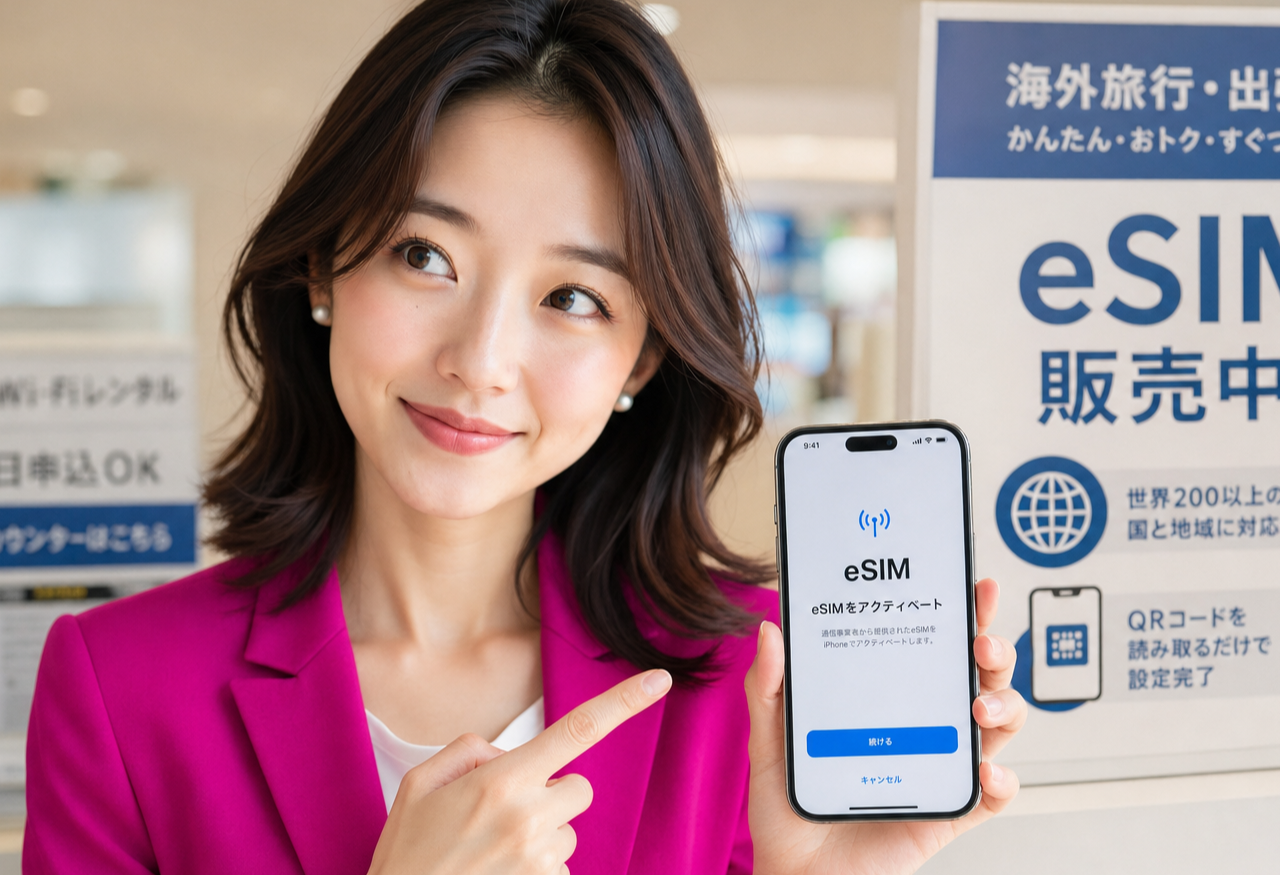
Hi, I'm Miya, and I help newcomers settle into life in Japan. When you travel overseas, you have two common ways to get data on the road: turn on international roaming so your Japanese line works abroad, or add a separate travel eSIM for local data while keeping your Japanese number in the background. Both are fine — the trick is deciding which handles your data, and making sure your Japanese number stays reachable the whole time.
That last part matters more than people expect. Your Japanese number is where your bank sends one-time codes and where apps send login verifications, so if you let the line go quiet while you're away, you can end up locked out of the very accounts you need on a trip.
Roaming vs a travel eSIM
International roaming means your existing Japanese plan reaches out to a partner network in the country you're visiting, so your same number and data just keep working when you land. It's the least-effort option because there's nothing new to install — you usually just toggle a setting on. The trade-off is that roaming data can be metered differently from your home usage, so it suits shorter trips or lighter data days.
A travel eSIM is a second, temporary line you buy for the destination and load onto your phone before you go. You use it for maps, browsing and messaging apps while abroad, which keeps your day-to-day data separate from your Japanese plan. Think of it as bringing your own local data with you, while your Japanese number stays available for the things only it can receive.
Dual-SIM: the setup I quietly recommend
Most modern phones can hold two lines at once — often one physical SIM plus one eSIM, or two eSIMs. That's what makes the travel eSIM approach so comfortable: you set the travel eSIM as your data line for browsing and maps, and you leave your Japanese line active for calls and SMS. You get local data speeds without giving up your home number.
The reason I like this is reachability. Your Japanese line can stay switched on to receive SMS even while another line carries your data, so verification texts still arrive. In your settings you simply choose which line does data and which handles calls and messages — a small bit of setup that saves a lot of stress later.
Keeping your number reachable for 2FA
Before you fly, do a quick audit of what depends on your Japanese number. Banking apps, government services, delivery accounts and many everyday apps send their security codes by SMS to that number, and some payment confirmations do too. If the number can't receive a message while you're abroad, those logins can stall at exactly the wrong moment.
So the goal while traveling is simple: keep the Japanese line alive and able to receive SMS. If you're roaming, that's automatic. If you're on a travel eSIM for data, keep the Japanese line switched on alongside it rather than turning it off. A short test before departure — trigger one login code and confirm it arrives — gives you real peace of mind.
Switching back on landing
Coming home to Japan, the switch-back is usually just undoing what you set for the trip. Turn international roaming off if you'd turned it on, and set your Japanese line back as your main data line in settings. If you used a travel eSIM, you can remove it or leave it dormant for next time — it won't interfere as long as it isn't the active data line.
Give your phone a moment to reconnect to a home network after you land, then send yourself a test message or open a data-heavy app to confirm everything is back to normal. Within a few minutes your everyday setup is restored and you're back to browsing and receiving codes exactly as before.
Why an active Japanese line is your anchor
Here's the thread running through all of this: your Japanese number is the anchor for two-factor codes even when you're on the other side of the world. As long as the line stays active and able to receive SMS, your bank codes and app logins keep reaching you — which is exactly what keeps you from being locked out while you travel.
If you haven't set up a Japanese line yet, the reassuring part is how simple it is to start. You can arrange it online with just your residence card, and an eSIM can be ready in about fifteen minutes — no shop visit, no long wait. Get that anchor in place, and traveling with your phone becomes one less thing to worry about.
Related guides

The Apps Every Newcomer in Japan Actually Needs (2026)
The short list of apps that really run daily life in Japan — transit, translation, LINE, payments — and why getting connected comes first. #PR
Read the guide →
The Certificate of Eligibility: The Paperwork That Happens Before Your Visa
A pre-arrival guide to Japan's Certificate of Eligibility: who applies, what you'll need to send, and how long to allow. #PR
Read the guide →
Reading Japanese Phone Numbers: What Those Prefixes Mean on a Form
How to read Japanese phone numbers: landline area codes, 070/080/090 mobiles, 0120 and 0570 prefixes, hyphens, and dialling +81. #PR
Read the guide →