Finding International, Halal and Vegetarian Groceries in Japan
Updated: 2026-09-14
Quick answer

Hi, I'm Miya, and I help newcomers settle into life in Japan.
If you are missing the ingredients you grew up with, they are usually easier to find here than people expect. The food from home tends to come from three places: import and international supermarkets, smaller halal and ethnic grocers that cluster near stations with large foreign communities, and online import shops that deliver nationwide. For dietary needs, the real skill is learning to read Japanese labels for allergens, pork, and alcohol. This guide walks through all of it, evenly and without pushing any single shop.
Import and international supermarkets
Larger cities generally have supermarkets that specialize in imported goods, and many ordinary department-store food floors carry an international corner too. These are often the easiest starting point because they stock a broad mix: pasta and sauces, cheeses, spices, canned beans, tea and coffee, baking ingredients, and snacks from several regions at once.
Selection and stock vary a lot by neighborhood and by season, so it helps to treat your first visit as scouting. If a store does not have something today, staff can sometimes tell you when a shipment typically arrives. Prices for imported items tend to run higher than local equivalents, which is normal for goods that travel a long way.
Halal and ethnic grocers near community hubs
Smaller specialist grocers are often the best source for specific cuisines. Halal butchers and grocery shops, South and Southeast Asian markets, Middle Eastern stores, and East Asian import shops tend to cluster near train stations and neighborhoods with larger foreign communities. Word of mouth within your own community, and simple map searches, usually surface them quickly.
These shops frequently carry things the big supermarkets skip: halal-certified meat, fresh herbs, particular rice varieties, regional spice mixes, pickles, and frozen breads. Many are family-run, so hours and stock can be irregular. A quick phone call before you travel across town can save a wasted trip, and staff are often happy to point you toward what you need.
Online import shops that deliver nationwide
If you live away from a big city, online import shops are often the most reliable option. Many specialize by region or cuisine and ship anywhere in Japan, which means you are not limited by what happens to be on a local shelf. Buying in slightly larger quantities can offset shipping costs, and non-perishable staples like rice, lentils, spices, and sauces travel well.
When you register, you will typically enter your Japanese address and a contact phone number. Some shops verify orders or arrange redelivery by phone, and delivery services frequently call or message the number you provide. Keeping refrigerated and frozen items in mind, check each shop's cold-chain and delivery-window options before ordering.
Reading labels for allergens and dietary needs
Learning a handful of label words makes shopping far less stressful. For allergens, look for the ingredients list (原材料名) and any allergen note. For those avoiding pork, watch for 豚肉 (pork) and 豚 in the characters, as well as gelatin (ゼラチン) and lard (ラード) that can appear in unexpected products. For alcohol, look for 酒 (sake), みりん (mirin), and 料理酒 (cooking sake), which are common in sauces and marinades.
Vegetarians and vegans should know that many Japanese broths use fish or bonito, so terms like だし (dashi), かつお (bonito), and 魚介 (seafood) are worth recognizing. Halal and vegetarian certification labels exist on some products but are not universal, so reading the ingredients directly is the dependable habit. A translation app that scans text can help until the key words become familiar.
A small vocabulary that goes a long way
A few words unlock a lot. 原材料名 (ingredients), アレルギー (allergy), 賞味期限 (best-by date), 消費期限 (use-by date), 冷蔵 (refrigerated), and 冷凍 (frozen) cover most of what you need to check on a package. For dietary filtering, ハラル (halal), ベジタリアン (vegetarian), and ヴィーガン (vegan) are increasingly recognized words to search or ask about.
When you ask staff, a simple phrase like "豚肉は入っていますか?" (Does this contain pork?) or "お酒は使っていますか?" (Is alcohol used?) goes a long way. Most people will do their best to help, and pointing at the package while asking usually bridges any language gap.
Getting connected so deliveries reach you
Almost every step above runs more smoothly once you have a Japanese phone number and data. Store-locator maps, online import shops, and delivery services all rely on a working number to verify orders, confirm addresses, and arrange redelivery, so getting connected early is part of getting the ingredients you miss.
The usual order is straightforward: have your residence card ready first, then complete the online identity check (eKYC), and an eSIM can activate the same day, often in about 15 minutes on an eSIM-ready phone. If you would like to introduce Rakuten Mobile's employee-referral campaign to yourself, take a look at the setup guide here and confirm the current terms on the official page before you sign up. There is no rush; do it whenever you are ready to start hunting down the flavors of home.
Related guides
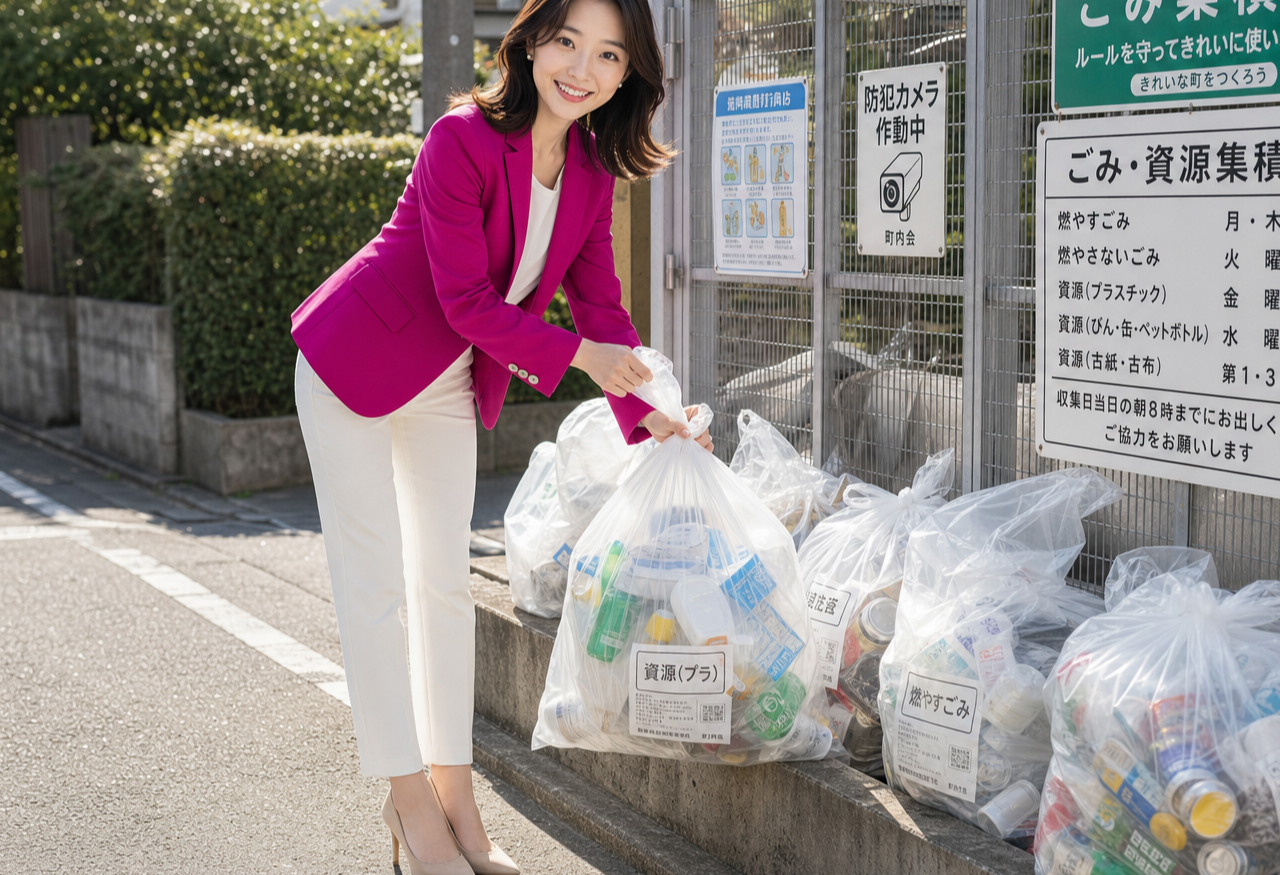
How Garbage Sorting Works in Japan (Without the Stress)
A calm, practical guide to sorting rubbish in Japan — the main categories, reading your ward's calendar, bags and collection days, and the recycling rules that trip up newcomers. #PR
Read the guide →Takkyubin: Sending Luggage and Parcels Ahead Across Japan
How takkyubin luggage forwarding works in Japan: airport-to-hotel suitcases, shipping bags ahead, cool delivery, and konbini drop-off. #PR
Read the guide →
National Holidays and Opening Hours in Japan: Planning Around Closures
How holidays, Golden Week, Obon and New Year close banks and offices, plus everyday hours to time your errands. #PR
Read the guide →