How Garbage Sorting Works in Japan (Without the Stress)
Updated: 2026-08-05
Quick answer
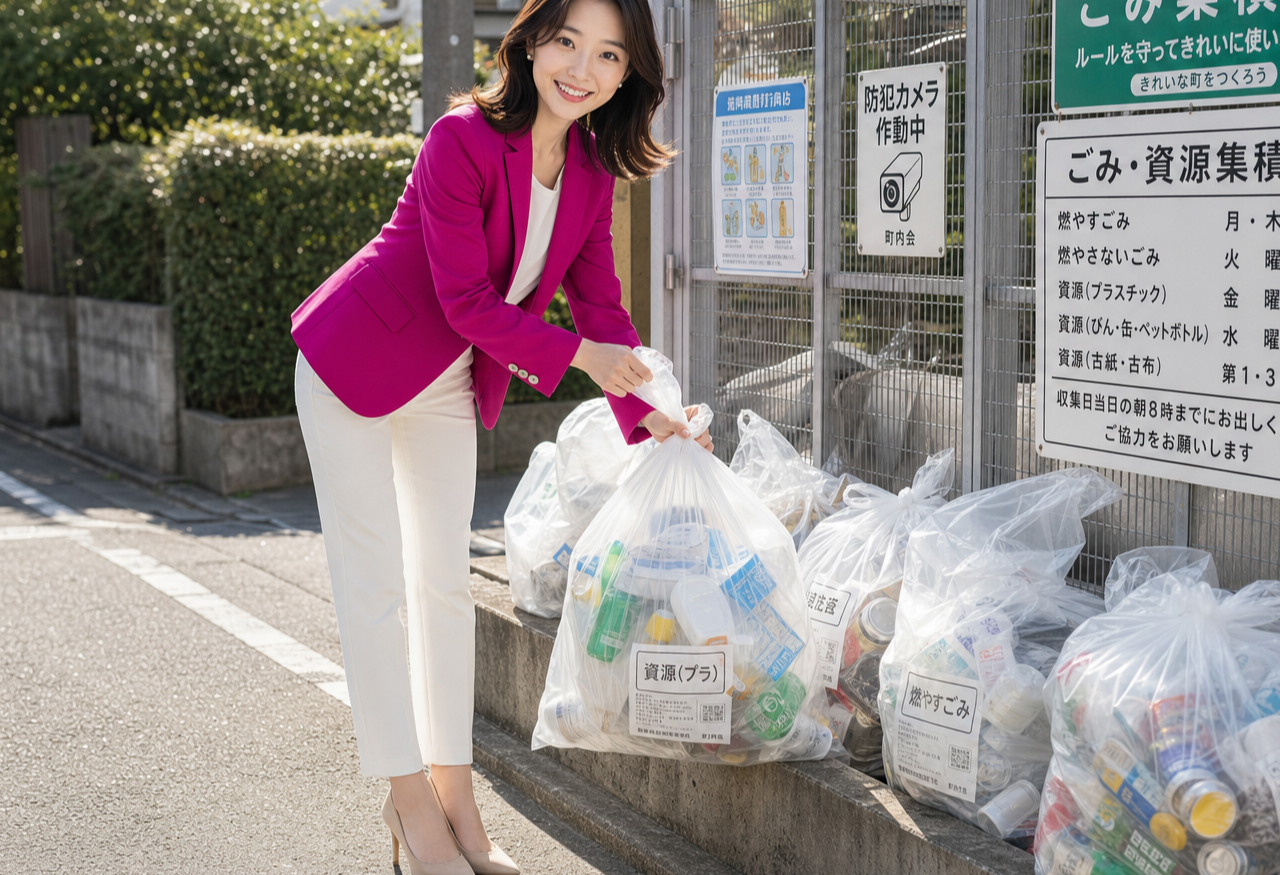
Hi, I'm Miya — I help newcomers settle into life in Japan, and garbage sorting is the everyday thing that worries people far more than it should. The honest truth is that it feels complicated for about a week, and then it's just a small routine you barely think about. The trick is that the rules are set by your city or ward, not by the country, so 'how to sort' really means 'how does my ward want it sorted.'
In this guide I'll walk you through the categories every area shares, how to read the collection calendar, which bags to use, the recycling rules that catch newcomers out, and how to handle bulky items. One thing to note up front: most wards now publish their schedules and sorting look-ups through an app or a LINE account, so having a Japanese number and mobile data makes the whole thing much easier.
The main categories, in plain terms
Almost everywhere sorts household waste into a handful of streams. 'Burnable' (可燃ごみ / moeru gomi) covers kitchen scraps, food-soiled paper, and small soft plastics in many wards. 'Non-burnable' (不燃ごみ / moenai gomi) is things like small metal, glass, ceramics, and broken small appliances. Then there are 'recyclables' (資源ごみ / shigen gomi) — PET bottles, cans, glass bottles, and clean paper or cardboard — usually collected separately.
The exact lines differ by ward: some treat plastic packaging as its own stream marked プラ, some burn it, and some split paper into several types. Don't try to memorise a national rule, because there isn't one. Learn the four or five buckets your own ward uses, and everything else follows from that.
Find your ward's rules and calendar first
Before your first collection day, get hold of two things: your ward's sorting guide and its collection calendar. When you register your address at the ward office, ask for the garbage guide — most hand out a printed booklet, and many offer it in English, Chinese, and other languages. It lists every category, which day each is collected, and how to prepare each item.
The calendar is the part you'll check most, because burnable, recyclable, and non-burnable days rotate through the week and month. Pin the paper version to your fridge if you like, but I'd also set up the digital one — searching your ward's name plus 'garbage app' or 'ごみ' usually turns up an official app or LINE account that shows today's category and even lets you type an item to see how to sort it.
Bags, timing, and where to put it out
Many areas require specific bags — sometimes clear or semi-transparent ones, sometimes paid designated bags (指定ごみ袋) sold at supermarkets and convenience stores. Using the wrong bag is the most common reason a bag gets left behind with a sticker on it, so check your guide before you buy a big roll of anything.
Timing matters too. Rubbish goes out on the morning of collection, usually before 8:00 or 8:30, at your building's designated spot or a local collection point (ごみ集積所) — never the night before, both for the rules and to avoid crows and cats getting into it. If you miss the morning, take the bag back inside and wait for the next matching day rather than leaving it out.
Recyclables: the details newcomers miss
Recyclables have a few extra steps that surprise people at first. PET bottles are usually prepared in three parts: pop off the cap and remove the label (these often go with plastics or burnables), give the bottle a quick rinse, and lightly crush it. Cans and glass bottles should be empty and rinsed, and many collection points ask you to separate them from one another.
Paper and cardboard are often bundled and tied with string rather than bagged, and clean paper is kept apart from food-soiled paper. Spray cans and small batteries are almost always handled separately for safety — never just tossed in with metal. When you're unsure which pile something belongs to, your ward's item look-up (in that app or booklet) will tell you exactly.
Oversized and special items
Anything past a certain size — furniture, futons, suitcases, larger appliances — counts as oversized rubbish (粗大ごみ / sodai gomi) and can't just go out on a normal day. You book a collection in advance, pay a small fee (usually by buying a sticker at a convenience store), write your booking number on it, and put the item out on the arranged day. The booking is done by phone or, increasingly, through an online form or app.
A few things follow their own rules entirely. Certain home appliances — such as TVs, fridges, washing machines, and air conditioners — are covered by a recycling law and are handled through the retailer or a designated route, not ward collection. PCs and some electronics have their own take-back schemes. When in doubt, your ward's guide points you to the right channel.
What makes all of this easy
Look back over everything here — checking today's category, looking up a mystery item, booking an oversized pickup, following your ward's LINE for schedule changes around the holidays. The tool that quietly powers all of it is your phone, with a Japanese number to receive the LINE and SMS confirmations and mobile data to check the calendar wherever you are.
That's why I always get people connected in their first days. With Rakuten Mobile you can apply online with just your residence card, and eSIM-capable phones can be up and running in about 15 minutes — so your ward's app and calendar are on your phone before your first collection day. Check current terms on the official page before you apply, and I'll be right here for the mobile part.
Related guides

Finding International, Halal and Vegetarian Groceries in Japan
Where newcomers actually find food from home in Japan: import and international markets, halal and ethnic grocers, online shops, and reading labels. #PR
Read the guide →Takkyubin: Sending Luggage and Parcels Ahead Across Japan
How takkyubin luggage forwarding works in Japan: airport-to-hotel suitcases, shipping bags ahead, cool delivery, and konbini drop-off. #PR
Read the guide →
National Holidays and Opening Hours in Japan: Planning Around Closures
How holidays, Golden Week, Obon and New Year close banks and offices, plus everyday hours to time your errands. #PR
Read the guide →