Takkyubin: Sending Luggage and Parcels Ahead Across Japan
Updated: 2026-08-30
Quick answer: what takkyubin is

Takkyubin is Japan's door-to-door parcel and luggage delivery service, and once I understood it, my life here got noticeably lighter. Instead of hauling a heavy suitcase across train platforms and up station stairs, I can send it directly from one address to another and simply show up. A courier picks the item up, moves it through the network, and hands it to the receiver at their door, often the very next day within the same region.
The service covers far more than boxes. You can send a single suitcase, a golf bag, a bicycle, a stroller, or a cardboard parcel of clothes, and each one travels with a printed label and a tracking number. It is the everyday backbone of how people in Japan move belongings around without carrying them, and it is completely normal to use it for personal trips, not just online shopping returns.
In this guide I'll walk through the situations newcomers love most: sending a suitcase from the airport to your hotel, shipping bags ahead of a trip, cool and frozen delivery for food, and how dropping a parcel off at a convenience store actually works. No carrier rankings here, just the practical shape of the service.
Airport to hotel: arrive with empty hands
The first time takkyubin really won me over was at the airport. After a long flight, the last thing I wanted was to drag a full suitcase onto a crowded train. At most major airports there is a delivery counter in the arrivals area where you can hand over your luggage and have it forwarded straight to your hotel or home. You fill in the destination, pay, and walk out with just your day bag.
Timing is the one thing to plan around: same-day arrival is not always possible, so I usually send my suitcase to arrive the next day and pack a small overnight bag with what I need for the first night. When I'm leaving Japan, I can do the reverse and send my luggage from the hotel to the airport ahead of my flight, then pick it up near the check-in area before departure.
This turns a stressful transfer into a calm one. I move through stations lightly, I don't block doorways with a giant case, and my belongings are waiting for me when I get where I'm going. For anyone traveling with children or a lot of gear, it changes the whole feeling of arriving in a new city.
Shipping bags ahead of a trip
The same idea works for domestic trips. Before I head to the mountains or the coast, I send my main bag a couple of days early so it's waiting at the accommodation when I arrive. Hotels and guesthouses are used to receiving guest luggage, and many will hold it until check-in as long as your name and arrival date are on the label.
It's worth a quick message to the accommodation first to confirm they accept forwarded luggage and to ask what name and reservation detail they'd like written on the parcel. When I check out, I can send the bag onward to my next stop or straight home, so I never have to carry a heavy case between destinations on a multi-city trip.
Skis, snowboards, and golf clubs travel this way too, which is a relief because they're awkward on trains. I just make sure to book the pickup with enough lead time, since longer distances and specialty items can take an extra day.
Cool and frozen delivery for food
One feature I didn't expect to rely on is temperature-controlled delivery, often called cool-takkyubin. It moves refrigerated and frozen items through a chilled part of the network, so seafood, sweets, seasonal fruit, and other perishables arrive still cold. When I send a food gift to a friend in another prefecture, this is what keeps it safe in transit.
There are usually two temperature bands, one for chilled and one for frozen, and you choose the right one when you book so the parcel stays in the correct zone the whole way. Cold items generally need to go over the counter rather than into an unattended drop box, and there are size and weight limits, so it helps to check before you pack a large cooler.
It's also how a lot of regional food shopping reaches your door. When I order specialty produce or frozen dishes from another part of Japan, the same cool network brings it to me, and I select a delivery time slot so I'm home to put it straight in the fridge or freezer.
Dropping off at a convenience store and filling the label
You don't have to wait at home for a courier. Many convenience stores accept takkyubin parcels at the service counter, which is how I send most of my smaller shipments. I bring the packed and sealed box, hand it to the staff with a completed label, and they scan it into the system and give me a receipt with the tracking number on it.
The label is the part that intimidated me at first, but it's straightforward once you've done it once. You write the receiver's address and name and the sender's address and name, ideally in Japanese so the sorting and last-mile delivery go smoothly, plus a working phone number for each side. That phone number matters, because the delivery team may call or message about timing, and the receiver's number is tied to redelivery if the first attempt is missed.
You can also pick a delivery date and a time slot on the label, choosing from morning and several afternoon-to-evening windows, which is how you make sure someone is there to receive it. If handwriting a Japanese address feels daunting, the carrier's app lets you save addresses and generate the label digitally, so you're mostly just confirming details at the counter.
Going hands-free with a connected line
What ties all of this together in practice is my phone. Carrier apps let me book a pickup at home, print or generate a label from a saved address, choose the delivery time slot, and follow the parcel with live tracking until it's handed over. Instead of writing everything by hand, I tap through a few screens and the courier comes to my door.
Those apps register with your Japanese phone number, and the delivery notifications, redelivery links, and pickup confirmations all flow to that line. So a stable connected number is quietly what makes hands-free travel possible: I can send my suitcase ahead, track it from the train, and get a message the moment it reaches the hotel.
If you're still setting up life in Japan, getting your own number sorted early pays off far beyond phone calls. It's the key that unlocks delivery apps, redelivery scheduling, and the everyday services that let you move through the country with empty hands, which is exactly the freedom takkyubin is built to give.
Related guides
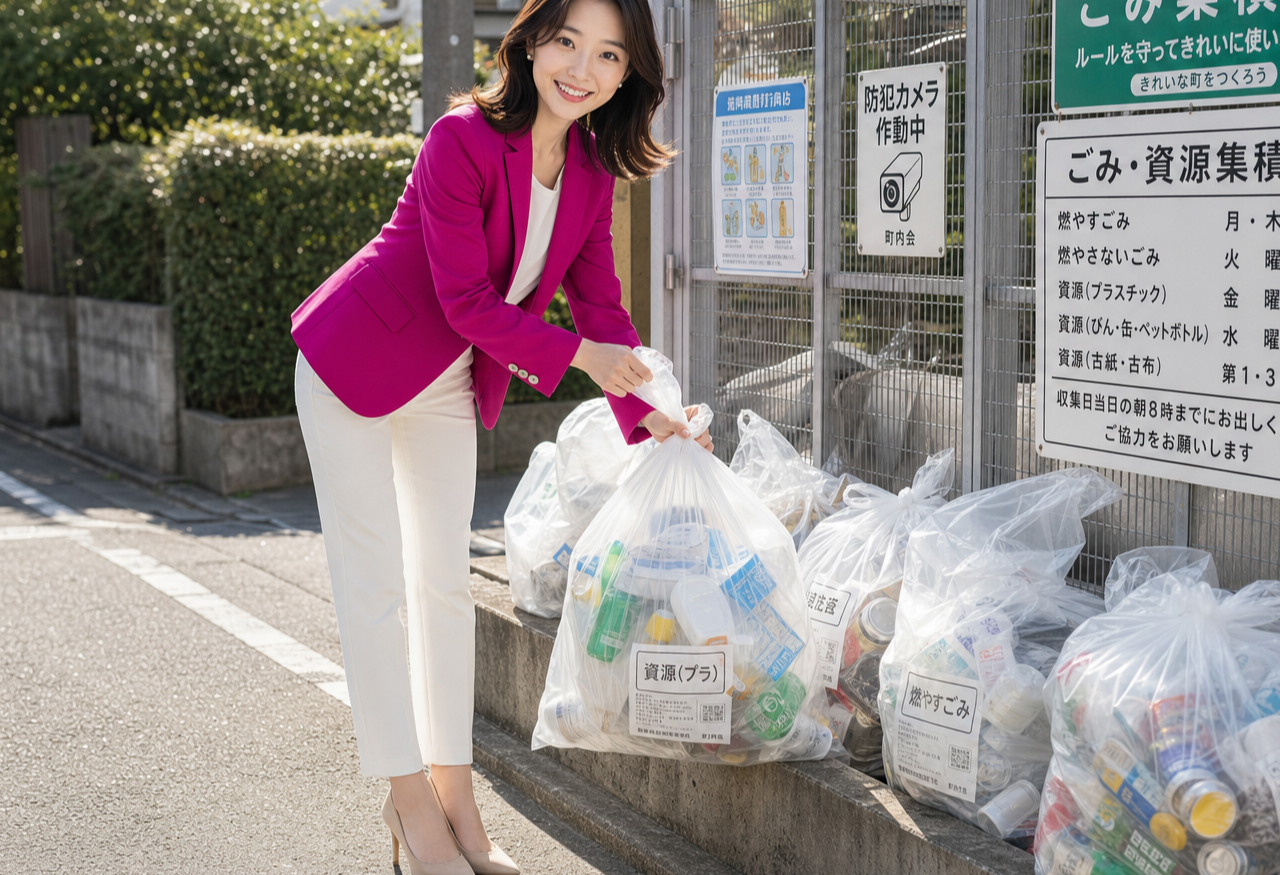
Gomi Sorting in Japan: Moeru Gomi, Sodai Gomi and the 8am Rule, With a Real Ward's Rules (2026)
Not burnable-vs-non-burnable. The four categories a Tokyo ward actually uses, the 8:00am deadline, the 30cm cube test for sodai gomi, the 危険 label for anything sharp, and how to find the calendar for your own street. Worked from Shinjuku City's official guide. #PR
Read the guide →
Grocery Delivery in Japan: Supermarket Delivery and Co-op Boxes
Two ways groceries reach your door in Japan: supermarket delivery you book by time slot, and the weekly co-op box. #PR
Read the guide →Finding International, Halal and Vegetarian Groceries in Japan
Where newcomers actually find food from home in Japan: import and international markets, halal and ethnic grocers, online shops, and reading labels. #PR
Read the guide →