Getting a Haircut in Japan: Booking, Vocabulary and What to Expect
Updated: 2026-08-26
Quick answer
Getting a haircut in Japan is easy once you know the two basic choices: a beauty salon (biyoushitsu) for cuts, color and styling, or a barber (rihatsuten) for classic men's cuts and a shave. Most places take reservations by phone or through a booking app, and you don't need perfect Japanese.
The single most helpful trick is to bring a reference photo on your phone. Point to it and say 'kono shashin mitai ni' (like this photo), add a word or two about length, and you've communicated most of what a stylist needs to know.
Salon or barber: which one to choose
A biyoushitsu (beauty salon) is the go-to for most people regardless of gender. It handles cutting, coloring, perms, and blow-dry styling, and the atmosphere tends to be relaxed and design-focused. If you want a modern shape or a color change, this is where you go.
A rihatsuten (barber) specializes in shorter men's styles and offers a traditional straight-razor shave, including the neck and face. Barbers are often quicker and more no-frills. Neither is 'better' — it just depends on the service you want.
How to book
Many salons prefer reservations, and you have three easy paths. Online booking apps let you pick a date, time, and sometimes a specific stylist, often with menus and prices shown up front — great if you'd rather not speak on the phone. Some salons also take bookings through their own website or social media messages.
Booking by phone is still common, especially at smaller neighborhood shops and barbers. A simple line like 'yoyaku onegaishimasu' (I'd like a reservation) followed by the day and a rough time usually does the job. Walk-ins are possible at some places, but calling ahead avoids a long wait.
Useful words to describe what you want
A few phrases go a long way. For length, try 'mijikaku' (shorter), 'sukoshi dake' (just a little), or 'totonoeru dake' (just tidy it up). To keep the length but reduce bulk, thinning is often described as 'karuku shitai' (I want it lighter). For bangs, 'maegami' is the word you need.
Point as you speak: touch where you want the length to fall and say 'kono kurai' (about here). Combine that with your reference photo and a phrase like 'kono shashin mitai ni onegaishimasu' (like this photo, please), and even with limited Japanese you'll be understood clearly.
Showing a reference photo
Stylists in Japan are very used to reference photos, and a picture removes almost all the guesswork. Save two or three images to your phone before you go — ideally showing the front, side, and back of the style you like.
It also helps to point out one thing you want to avoid, such as 'koko wa mijikaku shinaide' (please don't cut this part short). Being specific and visual is far more reliable than trying to translate every detail into words.
What a visit usually includes
At most salons, a shampoo and a blow-dry finish are part of the cut, so you'll often be led to a reclining basin for a wash partway through. Many stylists also offer a light head or shoulder massage during the shampoo. At a barber, a hot-towel shave is a common part of the service.
Tipping is not expected anywhere in Japan, including salons and barbers — the listed price is what you pay. When you're done, a simple 'arigatou gozaimashita' at the register is all that's needed.
A few etiquette notes
Arrive on time for your reservation, since schedules are usually tight. If you're running late or need to cancel, a quick phone call or app message is appreciated. During the cut, it's fine to stay quiet or chat — whatever feels comfortable.
If something isn't what you expected, it's okay to speak up gently while you're still in the chair; stylists would rather adjust than send you home unhappy. A calm 'mou sukoshi mijikaku' (a little shorter) mid-cut is completely normal.
One thing that makes it all smoother
Almost everything above runs more smoothly with a Japanese phone number and mobile data: booking apps often verify with an SMS code, salons call to confirm, and having data means you can pull up your reference photo or a translation on the spot.
If you're still setting up your life here, Rakuten Mobile is a straightforward option — you can sign up with just your residence card, get started with an eSIM in roughly five to ten minutes on the same day, and there's one simple unlimited plan to choose from. Domestic calls are free through the Rakuten Link app, which is handy for confirming a reservation. With a real number in hand, your first Japanese haircut is one less thing to worry about.
Related guides
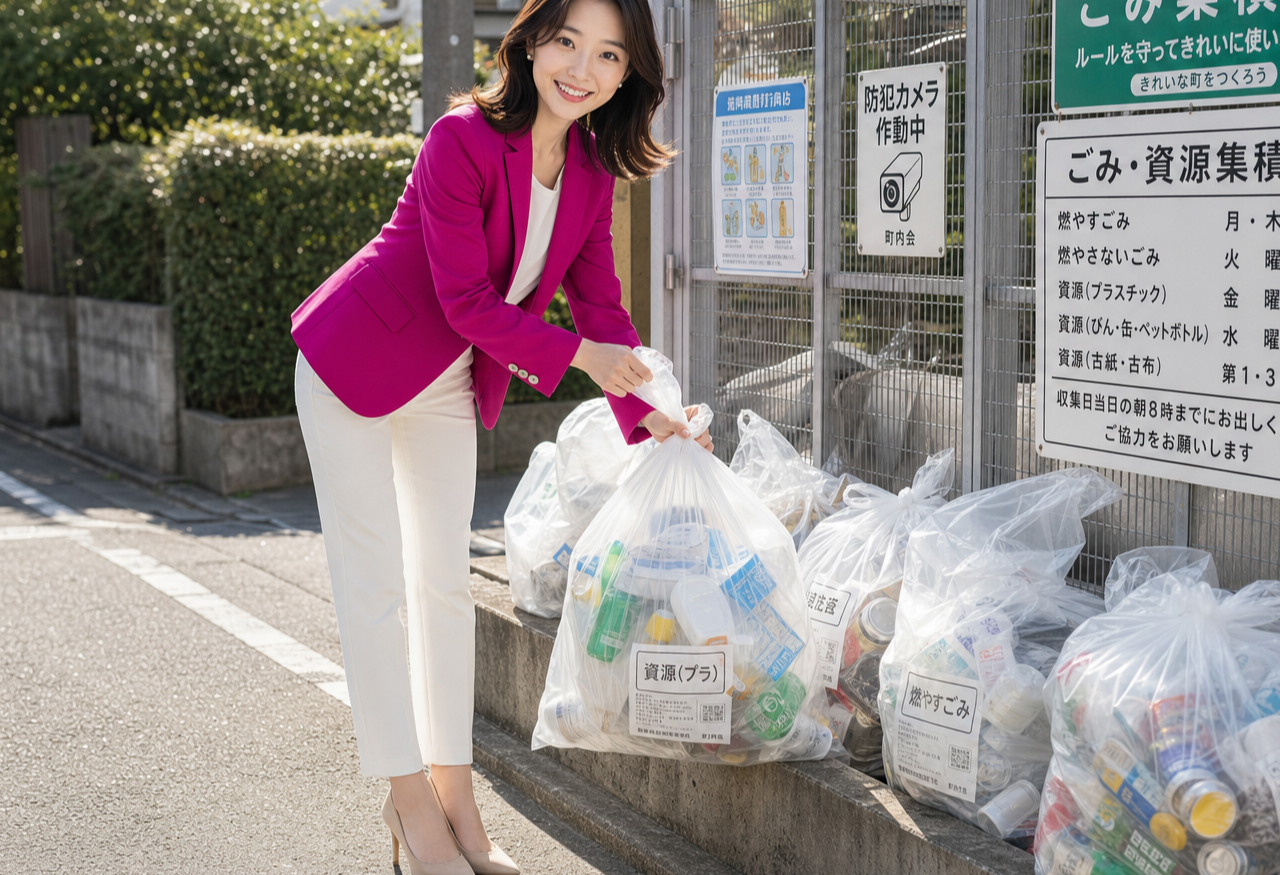
Gomi Sorting in Japan: Moeru Gomi, Sodai Gomi and the 8am Rule, With a Real Ward's Rules (2026)
Not burnable-vs-non-burnable. The four categories a Tokyo ward actually uses, the 8:00am deadline, the 30cm cube test for sodai gomi, the 危険 label for anything sharp, and how to find the calendar for your own street. Worked from Shinjuku City's official guide. #PR
Read the guide →
Grocery Delivery in Japan: Supermarket Delivery and Co-op Boxes
Two ways groceries reach your door in Japan: supermarket delivery you book by time slot, and the weekly co-op box. #PR
Read the guide →
Finding International, Halal and Vegetarian Groceries in Japan
Where newcomers actually find food from home in Japan: import and international markets, halal and ethnic grocers, online shops, and reading labels. #PR
Read the guide →