Typhoon Season in Japan: Alerts, Train Suspensions and Staying Safe
Updated: 2026-08-27
Quick answer

Hi, I'm Miya, your GetConnectedJapan guide. Typhoons are a normal part of the year in Japan, mostly from late summer into autumn, and the good news is that they come with plenty of advance notice. If you learn a few basics now, a storm becomes something you calmly prepare for rather than something that catches you off guard.
In short: watch the official warnings as they escalate, expect trains and flights to announce planned suspensions a day or two ahead, keep a small kit ready at home, and know where your local evacuation site is. This article walks through each of those so you feel ready before the wind picks up.
How typhoon season works
Typhoons form over the warm ocean and can reach Japan mainly in the later part of the year, often from around late summer through autumn. The exact timing shifts every year, so rather than marking a date, it helps to simply stay aware once forecasters start talking about a system approaching.
A single typhoon usually gives you days of warning as it moves. Forecasters share its expected path and when it may come closest to your area. That lead time is your friend: it's the window to shop, charge things, and decide whether you'll need to change any travel plans.
Reading warnings and advisories
Japan's official weather information comes in tiers that escalate as risk grows. Advisories come first as an early heads-up, warnings signal a more serious situation, and the highest-level emergency warnings mean take action to protect your life. When you see the level rising, treat it as a cue to move up your own preparations.
These alerts are issued by the Japan Meteorological Agency and echoed by local governments and news. Follow the official sources and your city or ward's instructions rather than guesswork. If an evacuation notice is issued for your area, act on it calmly and promptly.
Planned suspensions for trains and flights
When a strong typhoon is expected, railways and airlines increasingly use a planned-suspension system, called keikaku unkyuu in Japanese. Instead of stopping trains suddenly mid-storm, operators announce in advance, often a day or so ahead, that service will wind down and pause during a set window. Flights may be canceled early for the same reason.
If you see a planned-suspension notice, don't try to squeeze in one last trip. Check the operator's announcement for the expected stop and resume times, avoid travel during that window, and let work or school know if it affects your commute. Service usually returns gradually after the storm passes and safety checks are done, so allow extra time the next morning.
A simple home prep checklist
You don't need a bunker, just a few sensible things ready before the wind arrives. Keep some drinking water and easy food that needs no cooking, a torch or lantern, and a fully charged phone plus a power bank in case the electricity flickers. A little cash is handy too, since card readers can go down.
Look around your home as well. Bring in or tie down anything loose on a balcony or by the door, such as plant pots, umbrellas and drying racks, because strong wind can turn them into hazards. Close storm shutters if you have them, keep away from windows during the peak, and make sure you know the location of your nearest designated evacuation site before you ever need it.
Staying connected through a storm
Here's where your phone quietly matters. Typhoon warnings, planned-suspension notices for your train line, and evacuation information from your local government all reach you through your phone, so having your own Japanese number and mobile data is part of riding a storm out calmly. Being able to check the latest update from your sofa, or on the move, keeps you informed when things change quickly.
If you're still getting set up in Japan, an eSIM can activate the same day once your residence card is in hand, so you're connected before the season peaks. However you get online, the goal is simple: stay reachable, follow the official alerts, and let that lead time do its work. Prepare early, stay calm, and let the storm pass.
Related guides
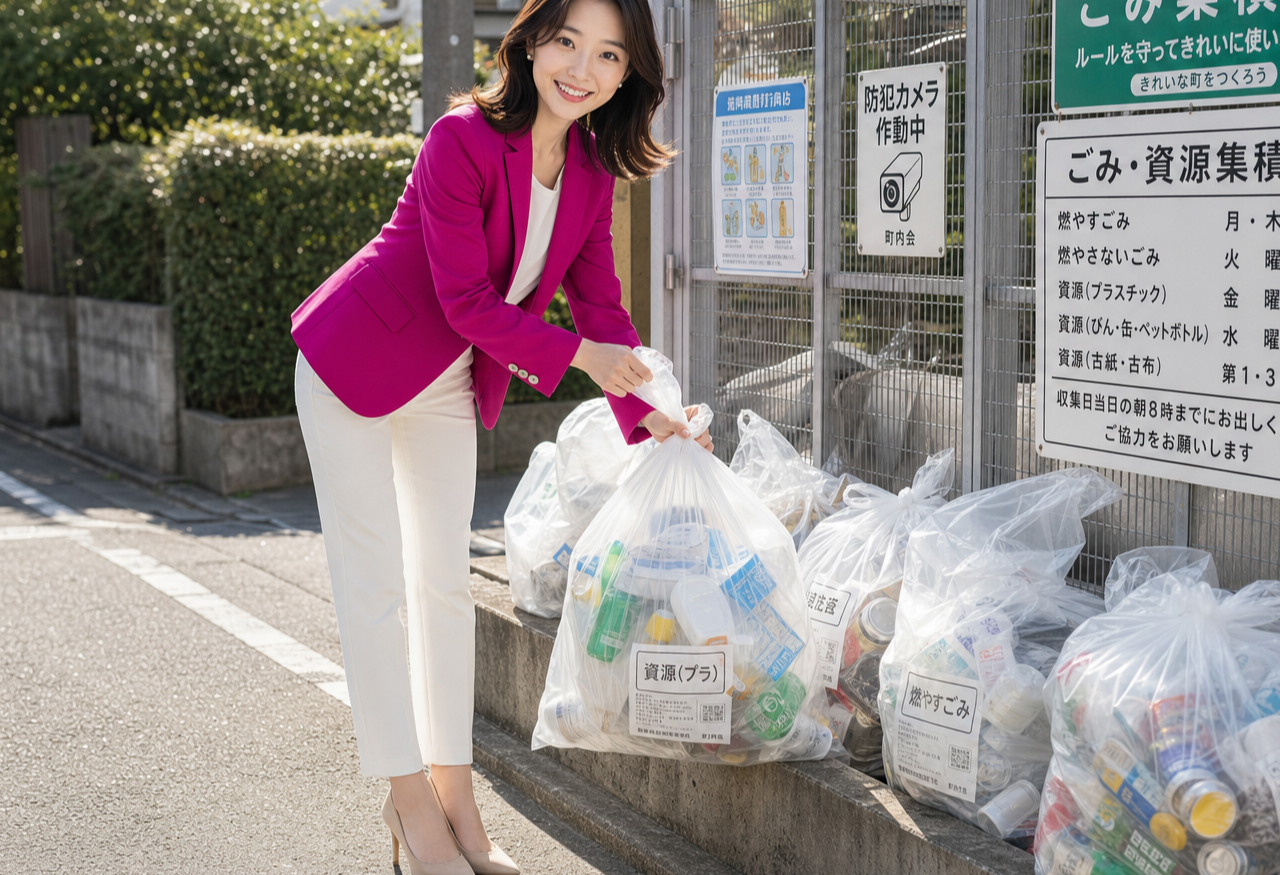
Gomi Sorting in Japan: Moeru Gomi, Sodai Gomi and the 8am Rule, With a Real Ward's Rules (2026)
Not burnable-vs-non-burnable. The four categories a Tokyo ward actually uses, the 8:00am deadline, the 30cm cube test for sodai gomi, the 危険 label for anything sharp, and how to find the calendar for your own street. Worked from Shinjuku City's official guide. #PR
Read the guide →
Grocery Delivery in Japan: Supermarket Delivery and Co-op Boxes
Two ways groceries reach your door in Japan: supermarket delivery you book by time slot, and the weekly co-op box. #PR
Read the guide →
Finding International, Halal and Vegetarian Groceries in Japan
Where newcomers actually find food from home in Japan: import and international markets, halal and ethnic grocers, online shops, and reading labels. #PR
Read the guide →