Using Japan's Post Office: Sending Mail, Parcels and Mail Forwarding
Updated: 2026-08-25
Quick answer
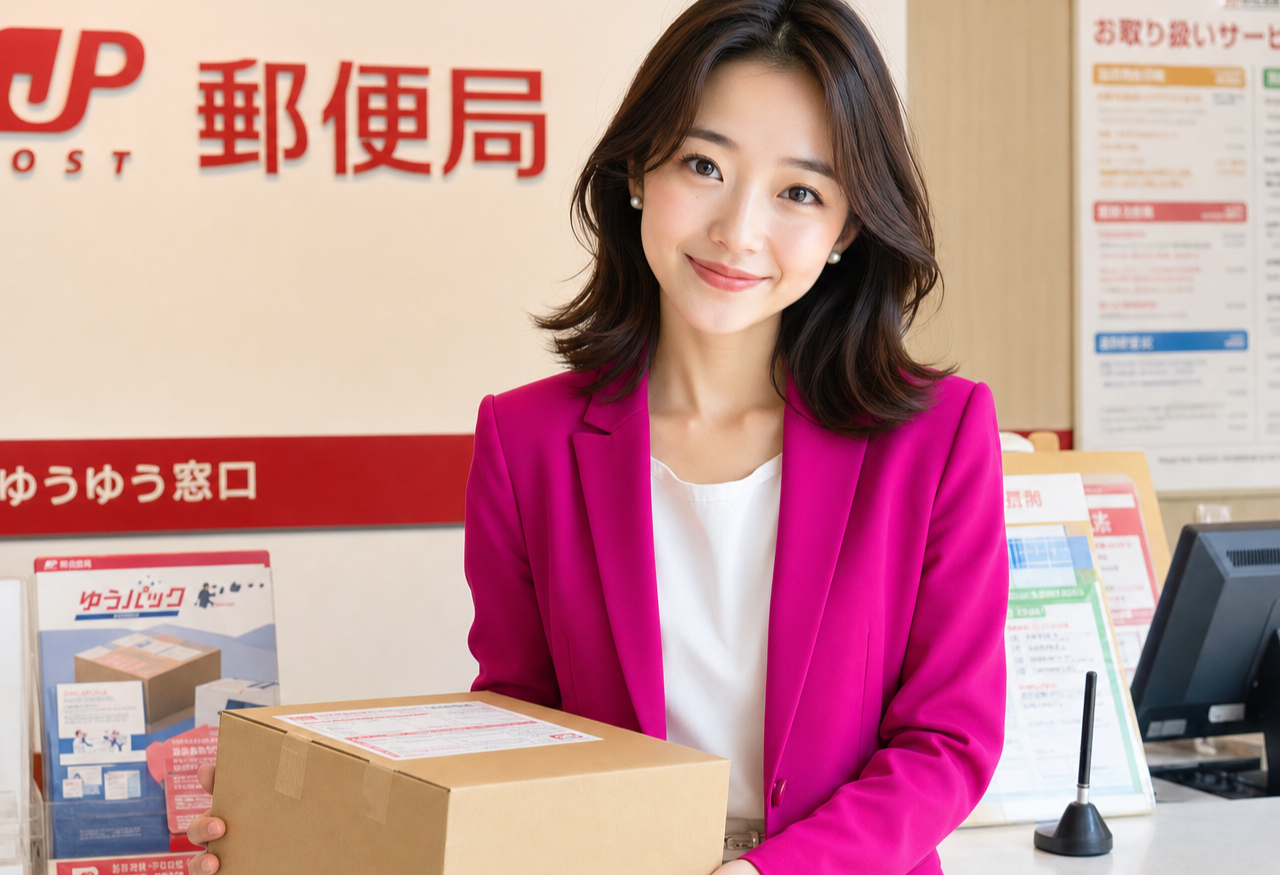
Japan Post (Yubin Kyoku) handles most sending you'll ever need: a postcard or letter, a flat-rate Letter Pack, or a tracked Yu-Pack parcel. Walk up to any post office counter, tell the clerk where it's going and roughly what's inside, and they'll weigh it, quote the price and stick on the right label. You don't need to speak much Japanese for basic sends.
When you move house, you also file a change-of-address request (tenso todoke) so mail chasing your old address gets forwarded to the new one for about a year. That, plus tracking a parcel online, is what this guide walks through.
Sending a letter or postcard
Regular mail (futsu yubin) is the cheapest option for a standard letter or postcard. Postboxes on the street are red with two slots: one is usually for regular letters and postcards, the other for larger or special mail, so read the small labels before you drop anything in. If you're unsure about the stamp value for the size and weight, the counter will weigh it and sell you the exact stamps.
Domestic letters typically arrive in a few days. For anything you'd be sad to lose, ask for a tracked or recorded option at the counter rather than dropping it in a postbox, since plain regular mail has no tracking number.
Letter Pack for documents and thin items
Letter Pack is a flat-rate prepaid envelope you buy at the post office, and it's a favorite for sending documents, thin goods and paperwork at a fixed price regardless of weight up to the limit. There are two versions: one that comes to your door and needs a signature, and a cheaper one that's dropped straight into your mailbox. Both include a tracking number printed on the envelope.
You can fill in the sender and recipient fields at home, then either hand it over at a counter or post it in a mailbox once the postage envelope is sealed. Peel off and keep the tracking sticker so you can follow it online.
Yu-Pack for parcels
Yu-Pack is Japan Post's tracked parcel service for boxes and bulkier items. Price depends on the box size and the destination region, so a small box across town costs less than a large one across the country. You can drop parcels at a post office counter, and in many areas you can also arrange a home pickup so a driver collects the box from your door.
Every Yu-Pack gets a tracking number, and you can choose a delivery date and time window when you send it. Cold and frozen options exist for food, and there are oversized tiers for big items, so just tell the clerk what's inside and how it should travel.
Tracking your mail online
Letter Pack and Yu-Pack both carry a tracking number, which you enter on Japan Post's tracking page or app to see when it was accepted, where it is, and when it was delivered. Keep the receipt or the peel-off sticker until the item safely arrives, because that number is your only way to trace it.
The tracking site and app are the fastest way to check status, and they're the same tools you'll use later for redelivery on packages you receive. Getting comfortable with the online lookup now saves counter trips down the line.
Mail forwarding when you move (tenso todoke)
When you change address, file a forwarding request (tenso todoke) so mail sent to your old home is redirected to your new one for roughly one year from the start date. You can submit it on paper at a post office, or online, and there's no fee for the service. It's separate from the resident registration you do at the city or ward office, so remember to do both.
Forwarding covers most ordinary mail but not everything, so it's still worth updating your address directly with your bank, employer and key services. Think of forwarding as a safety net that catches the letters you forgot to redirect, not a permanent replacement for telling senders your new address.
Paying and small extras at the counter
Post offices handle postage in cash and increasingly by card or IC transport cards at the counter, and many branches also offer postal savings and simple over-the-counter services on the banking side of the building. For everyday sending you rarely need any of that, though, since a stamp or a prepaid Letter Pack covers most tasks.
Opening hours vary a lot: small local offices close in the evening and on weekends, while larger main offices keep longer hours and sometimes a late window for urgent mail. Check your nearest branch's hours before a special trip.
Set up online tracking before you send
Almost everything convenient here runs through Japan Post's website and app: tracking a Yu-Pack, arranging a home pickup, and filing that forwarding request online when you move. All of them assume you can receive a verification code by SMS, which means you need a Japanese phone number and a bit of mobile data to sign in and confirm.
So a smooth first step, even before your first parcel, is getting a local number and data sorted. With that in place you can track sends, book pickups and update your address from your phone instead of queuing at a counter.
Getting connected so the carrier's tools work for you
If you're still setting up your phone line, Rakuten Mobile lets you apply online with just your residence card, and an eSIM can activate the same day in about five to ten minutes without visiting a store. That gets you a Japanese number and data quickly, which is exactly what the tracking and forwarding tools need.
It runs one simple unlimited plan with free domestic calls through the Rakuten Link app, so once you're set up you can handle post office follow-ups, redelivery and address changes entirely from your phone.
Related guides
Gomi Sorting in Japan: Moeru Gomi, Sodai Gomi and the 8am Rule, With a Real Ward's Rules (2026)
Not burnable-vs-non-burnable. The four categories a Tokyo ward actually uses, the 8:00am deadline, the 30cm cube test for sodai gomi, the 危険 label for anything sharp, and how to find the calendar for your own street. Worked from Shinjuku City's official guide. #PR
Read the guide →
Grocery Delivery in Japan: Supermarket Delivery and Co-op Boxes
Two ways groceries reach your door in Japan: supermarket delivery you book by time slot, and the weekly co-op box. #PR
Read the guide →
Finding International, Halal and Vegetarian Groceries in Japan
Where newcomers actually find food from home in Japan: import and international markets, halal and ethnic grocers, online shops, and reading labels. #PR
Read the guide →