Grocery Shopping in Japan: Supermarkets, Drugstores and Point Cards
Updated: 2026-08-24
Quick answer

Hi, I'm Miya, and I'd love to walk you through the first grocery run of your new life in Japan. Here's the short version: for fresh food and meals you'll mostly use a supermarket, for daily goods like shampoo, tissues and snacks a drugstore is often surprisingly cheap, and for buying in bulk you'll head to a discount store.
A few habits make it all smoother: shop in the evening to catch markdown stickers, learn two little date words on the labels, bring your own bag, and set up a store point or coupon app if you shop somewhere often. Don't worry — none of this is hard once you've done it once.
Three kinds of stores, and when to use each
The supermarket (スーパー) is your everyday base: fresh vegetables, fish, meat, rice, ready-made side dishes and a full range of ingredients. This is where most of your weekly cooking supplies will come from.
The drugstore (ドラッグストア) sells far more than medicine. Alongside toiletries and cleaning supplies, many stock snacks, drinks, instant noodles and some chilled or frozen food — and for those daily basics they're often cheaper than a supermarket. It's worth stepping inside even if you're not feeling sick.
The discount store is best for buying larger quantities or household items at once — think big bags of rice, cases of drinks, or seasonal goods. If you're stocking up rather than shopping for tonight's dinner, this is the place.
Evening markdown stickers
Late in the day, staff start putting discount stickers (値引きシール) on fresh items that need to sell before closing — deli boxes, sushi, bread, meat and fish near their sell-by point. You'll see small labels showing a reduced amount or a percentage taken off.
If you can shop an hour or two before closing, it's a friendly way to eat well for less. The stickered items are perfectly good for eating that day or the next — just check the dates, which brings me to the labels.
Reading the labels
Two date words are worth knowing. 賞味期限 (best-before) is about quality — food is still safe a little past it, it may just taste slightly less fresh. 消費期限 (use-by) is about safety and appears on quick-to-spoil items like fresh deli food and raw fish; try to eat those by that date.
If you have allergies or preferences, look for 原材料 (ingredients) on the back of the package — ingredients are listed in order of quantity. You don't need to read every character; just spotting these few words will help you shop with confidence.
Bags, self-checkout and paying
Plastic bags at the register usually cost a small fee, so most people bring their own reusable bag (エコバッグ). Keep one folded in your pocket or backpack and you'll never be caught out. After paying, you bag your own groceries at the packing counter just past the till.
Many stores now have self-checkout (セルフレジ) where you scan items yourself, and semi-self registers where staff scan and you pay at a separate machine. They accept cash and, increasingly, cards and contactless payment. If you're unsure, the staffed lane is always fine — no one will mind.
Point apps, coupons, and why a phone number helps
If you find a store you like, its point or coupon app can make regular shopping a little nicer — you scan a barcode at checkout, collect rewards over time, and unlock member coupons. It's a gentle way to get more out of places you already visit.
Here's the practical catch I want you to know early: most of these store apps ask for a Japanese phone number when you sign up, both to verify you and to send login codes. Once you have a working Japanese number, registering takes a minute and everything else falls into place. Getting connected really does smooth out these small, everyday moments — and that's exactly what I'm here to help with.
Related guides
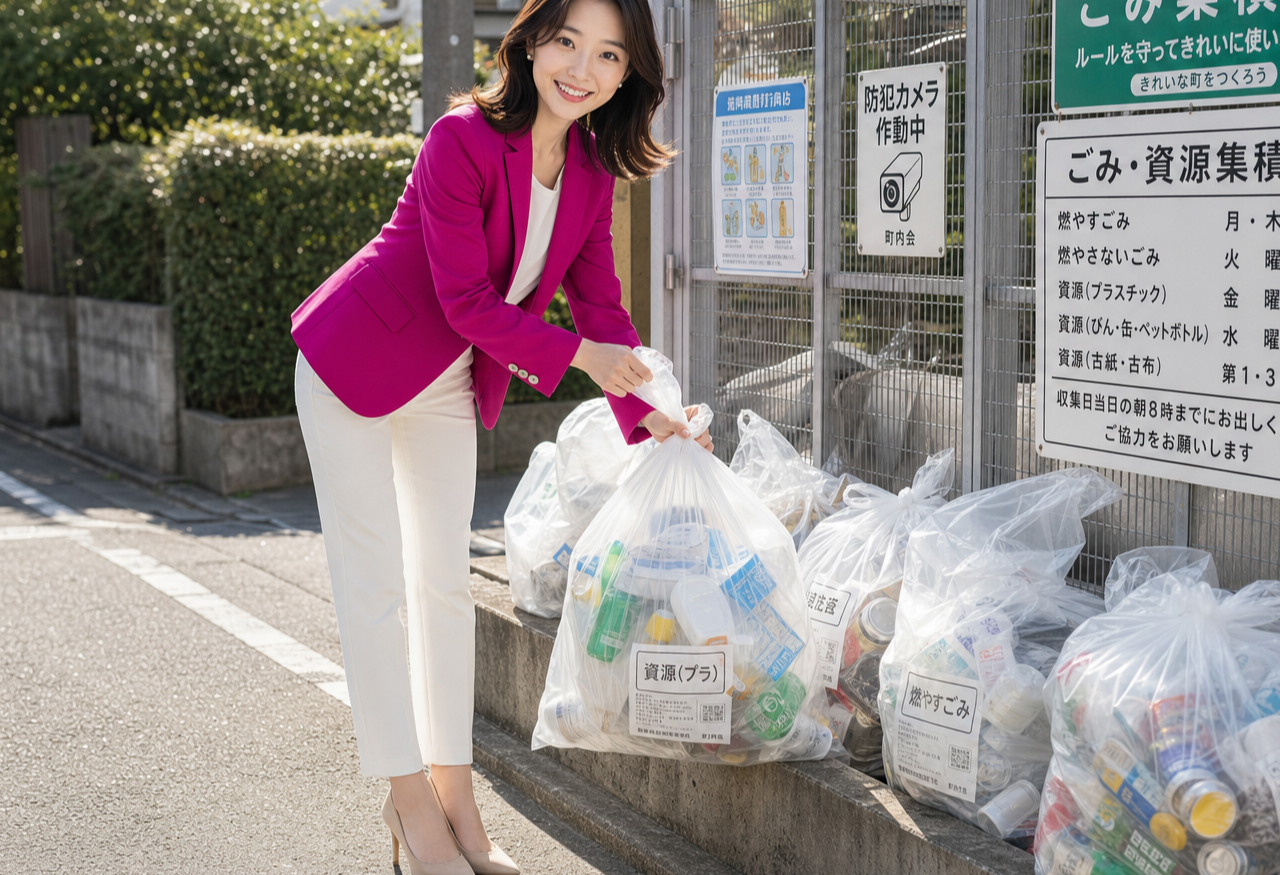
Gomi Sorting in Japan: Moeru Gomi, Sodai Gomi and the 8am Rule, With a Real Ward's Rules (2026)
Not burnable-vs-non-burnable. The four categories a Tokyo ward actually uses, the 8:00am deadline, the 30cm cube test for sodai gomi, the 危険 label for anything sharp, and how to find the calendar for your own street. Worked from Shinjuku City's official guide. #PR
Read the guide →
Grocery Delivery in Japan: Supermarket Delivery and Co-op Boxes
Two ways groceries reach your door in Japan: supermarket delivery you book by time slot, and the weekly co-op box. #PR
Read the guide →
Finding International, Halal and Vegetarian Groceries in Japan
Where newcomers actually find food from home in Japan: import and international markets, halal and ethnic grocers, online shops, and reading labels. #PR
Read the guide →